Navigating the Geopolitical Crucible: The UK's Deliberate Stance Amidst Middle East Tensions
The international stage has once again become a theatre of profound geopolitical shifts, with recent US and Israeli actions against Iran sending ripples of uncertainty across the globe. Amidst this escalating tension, the United Kingdom finds itself at a critical juncture, meticulously articulating its foreign policy amidst a cacophony of international voices. For an institution like EverGreen, dedicated to the intricate structures of both architecture and intellect, observing the deliberate construction of diplomatic responses is as compelling as any physical edifice. This analysis dissects the UK government's carefully calibrated position, the underlying principles guiding its foreign policy, and the broader implications for global stability and economic foresight.
Westminster's Unwavering Principle: Disavowing Regime Change from the Skies
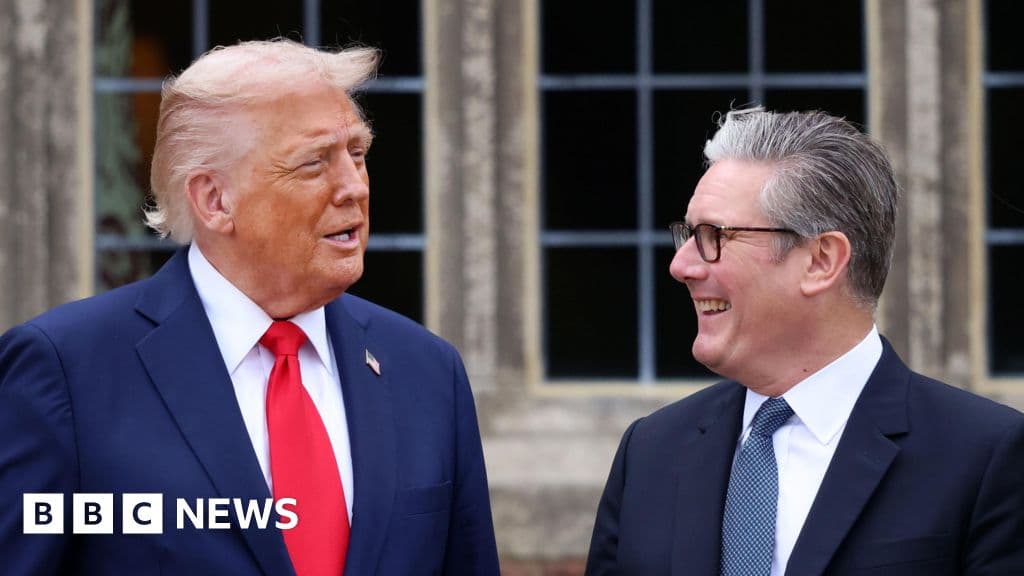
In a recent address to the House of Commons, the Prime Minister explicitly delineated the government's stance, drawing a clear line in the sand. He stated unequivocally that the UK "does not believe in regime change from the skies." This statement, more than a mere diplomatic aside, represented a significant and openly acknowledged divergence from the position of a key ally, President Donald Trump. Such a direct articulation of disagreement, particularly on a matter of international intervention, marks a potentially pivotal moment in UK-US relations, highlighting a deep-seated philosophical difference regarding the application of military force in sovereign nations.
The Echoes of Iraq: A Historical Imperative
The Prime Minister's firm declaration is not born in a vacuum; it resonates with the indelible lessons of past interventions. The spectre of the Iraq War, a conflict that predates the Prime Minister's parliamentary career by over a decade, cast a long shadow over the parliamentary debates. Its repeated invocation across the chamber underscored a pervasive caution against unilateral or ill-conceived foreign adventures. For the current leadership, the experience of Iraq serves not merely as a historical footnote but as a foundational case study, shaping a foreign policy outlook anchored in prudence and a measured approach to international security.
The Labyrinth of Legality: Alliances, Law, and Sovereign Prerogatives
The complexities of modern diplomacy extend beyond mere political alignment, delving deep into the nuanced interpretations of international law. Sir Keir Starmer, representing the opposition, navigated this intricate legal landscape with a similarly calibrated approach. While expressing reservations about the inherent rectitude and potential legality of the American and Israeli actions, he simultaneously affirmed the legitimacy of authorising the US to utilise UK airbases. This authorisation, he argued, was a justifiable and lawful measure aimed at protecting British allies in the Gulf from potential missile attacks, thereby drawing a distinction between the actions of an ally and the defensive enablement of such actions within a framework of strategic partnership.
Parsing International Law: The Shadow Attorney General's View
This intricate legal dance was further illuminated by the Shadow Attorney General, Lord Wolfson, who offered a detailed exposition of how UK involvement, even in an enabling capacity, could be robustly defended under the ambit of international law. Yet, the Prime Minister's own instincts, shaped by his background as a senior lawyer, leaned towards an even stricter interpretation of lawful conduct, underscoring a deep-seated commitment to the sanctity of international legal frameworks. This inherent tension between pragmatic alliance and principled legality forms the core of the ongoing intellectual debate within Westminster.
Public Opinion and Political Fragmentation: The Domestic Mirror
The international imbroglio finds its reflection in the domestic political landscape and public sentiment. A recent YouGov poll vividly illustrates a significant public disquiet in Britain, revealing a pronounced opposition to the US's actions and, even more starkly, to the UK's decision to facilitate those actions through the use of British airbases. This public sentiment finds echoes across the political spectrum, albeit with varying degrees of emphasis. While the Conservative and Reform UK parties advocate for more explicit support for allies like the US and Israel, the Liberal Democrats, Green Party, and Scottish National Party express sharper criticisms of President Trump's foreign policy approach, highlighting a fractured consensus on a matter of critical international importance.
Economic Stability Amidst Geopolitical Turbulence: The Spring Statement's Challenge
As the diplomatic discussions unfolded, attention also turned to the domestic economic front. Chancellor Rachel Reeves was poised to deliver her Spring Statement, an event initially conceived as a low-key affair, explicitly labelled "not a fiscal event" to temper expectations of significant tax or spending alterations. Intended primarily as a response to the Office for Budget Responsibility's forecasts, its focus was firmly on stability, curbing the cost of living, managing borrowing and debt, and cultivating conditions conducive to economic growth.
The Interconnectedness of Global Affairs and Domestic Economy
However, the recent international shockwaves inevitably demanded a hasty reassessment. The unfolding economic and diplomatic consequences of President Trump's actions necessitate at least a rapid insertion of new paragraphs into the Chancellor's speech, transforming an anticipated routine update into an urgent commentary on global interconnectedness. This swift adaptation underscores a fundamental truth: in an increasingly globalized world, domestic economic stability is inextricably linked to the unpredictable currents of international relations. The tremors from distant geopolitical shifts invariably reverberate through national treasuries and household budgets, making economic foresight a complex calculus of both domestic indicators and international instability.
Conclusion: Architects of Future Stability
The unfolding events present the UK with a formidable challenge: to meticulously navigate a complex web of alliances, international legal obligations, and domestic expectations, all while striving to maintain regional and global stability. The careful articulation of its foreign policy, the nuanced legal interpretations, and the vigilant monitoring of economic indicators collectively represent a sophisticated act of intellectual architecture. For EverGreen, this period highlights the profound responsibility of states to construct policies that are not only robust in principle but also adaptable to the ever-shifting sands of the geopolitical landscape, ensuring that the foundations of peace and prosperity are built on foresight, legality, and a deep understanding of interconnected global dynamics.