
In an era defined by rapid technological advancement and complex geopolitical alignments, the concept of strategic sustainability in military conflicts has taken center stage. The recent pronouncements from global leaders, particularly the assertion by former US President Donald Trump regarding his nation's "virtually unlimited supply" of key weaponry, juxtaposed against Iran's declaration of an extended capacity to resist, underscore a critical intellectual inquiry for EverGreen. Beyond the rhetoric, the practicalities of military logistics, the finite nature of weapons stockpiles, and the relentless tempo of modern warfare reveal a nuanced reality where strategic foresight and industrial resilience are as crucial as raw firepower.
This analysis delves into the intricate dynamics of resource attrition, the evolving landscape of defense production, and the profound implications for geopolitical stability. We examine how current conflicts, particularly the intensified engagements in the Middle East, are testing the limits of even the most powerful nations' defense readiness and illuminating the delicate balance between technological superiority and the sheer volume of material required to sustain prolonged hostilities. Understanding these factors is paramount for comprehending the true contours of contemporary international relations and the future architecture of conflict.
The Scrutiny of Strategic Reserves: A New Paradigm in Modern Conflict
The intensity of current military operations, especially in flashpoints such as the ongoing tensions involving the US, Israel, and Iran, has brought into sharp relief the challenges associated with sustaining high-tempo combat. While traditional military doctrine often emphasized pre-conflict accumulation, the speed and scale of contemporary engagements mean that weapon production rates are now being rigorously tested against consumption. Experts from institutions like the Tel Aviv-based Institute for National Security Studies (INSS) have highlighted staggering figures, estimating thousands of strikes conducted by the US and Israel, each consuming multiple munitions. Simultaneously, Iran has reportedly launched hundreds of missiles and thousands of drones, many intercepted, yet contributing significantly to the rapid expenditure of resources on both sides.
This environment necessitates a profound re-evaluation of national defense expenditure and industrial capacity. The notion of an "unlimited supply" quickly confronts the logistical realities of intricate supply chains, specialized manufacturing processes, and the time required to scale up production of advanced armaments. The lessons from other protracted conflicts, where even technologically superior forces faced logistical hurdles, serve as stark reminders that sheer numbers, though not the sole determinant, remain a significant factor in the calculus of endurance. The ability of a nation's military-industrial complex to pivot from peacetime production to wartime acceleration becomes a critical element of strategic sustainability.
Iran's Evolving Capacity and Tactical Adjustments
Recent intelligence reports suggest a notable decrease in the tempo of Iranian offensive operations, particularly regarding missile and drone launches. Western officials have observed a reduction from hundreds of projectiles on the initial days of conflict to dozens presently. General Dan Caine, America's top commander, reported an 86% drop in Iran's ballistic missile launches and a 73% decrease in drone activity since the conflict's onset. This dramatic decline raises pertinent questions about Iran's ballistic missile capabilities and the endurance of its widely reported drone fleets.
Prior to the conflict, estimates placed Iran's short-range ballistic missile stockpile at over 2,000, alongside mass production of tens of thousands of Shahed one-way attack drones – technology subsequently exported and effectively utilized in other global conflicts. The current reduction could signal genuine attrition of reserves, indicating that Iran is struggling to maintain its initial operational tempo. Alternatively, it might represent a strategic pivot, an attempt to conserve existing weapons stockpiles in anticipation of a prolonged conflict, or to adapt to changing battlefield dynamics. This tactical adjustment highlights the adaptive nature of drone warfare and missile defense strategies.
Air Supremacy and the Shifting Battlefield Dynamics
A significant development in the unfolding conflict has been the reported achievement of air supremacy by US and Israeli forces over Iranian airspace. With much of Iran's air defenses reportedly neutralized and its conventional air force rendered largely ineffective, the battlefield dynamics have fundamentally shifted. This allows for a critical transition in targeting strategies and weapon deployment. According to US Central Command (Centcom), the focus is now moving towards systematically hunting down Iran's remaining missile and drone launchers, disrupting its supply chain resilience, and destroying the factories responsible for their production.
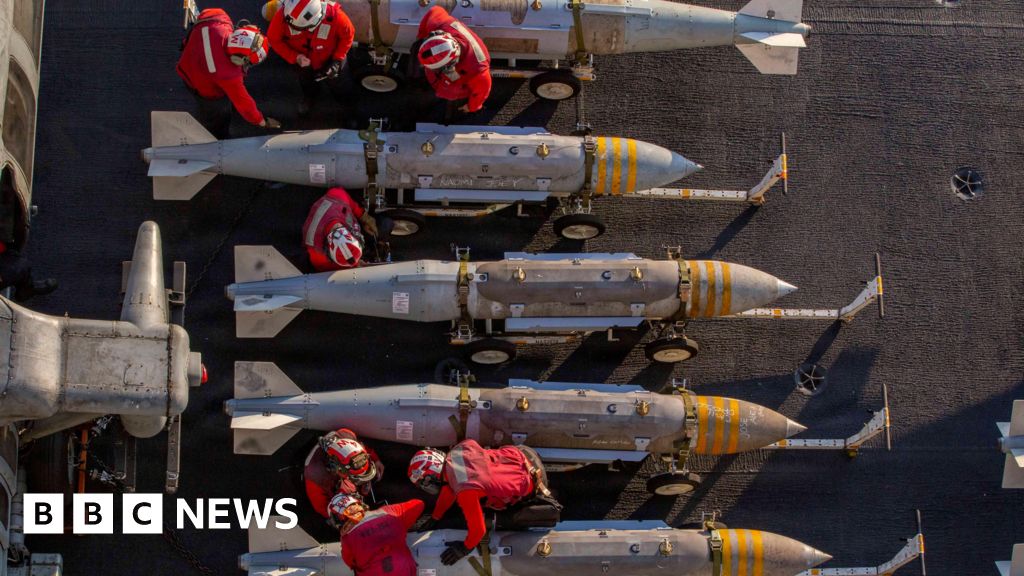
This shift enables the use of different classes of weaponry. Initially, the US relied on costly and sophisticated "stand-off weapons" like Tomahawk cruise missiles, designed for long-range engagement with minimized risk. With air superiority established, the military can now deploy less expensive "stand-in weapons," such as JDAM bombs, which can be dropped directly over targets. Mark Cancian, a former US Marine colonel and expert from the Center for Strategic and International Studies (CSIS), notes that this transition allows for a more cost-effective prosecution of the air-to-ground campaign, potentially sustainable for an extended period as the list of high-value targets gradually diminishes.
The Persistence of Irregular Warfare and Hidden Assets
Despite achieving air supremacy and the ability to conduct strikes more freely, the complete degradation of an adversary's fighting capacity, particularly one spread across a vast and geographically complex nation like Iran, remains an immense challenge. Iran, a country three times the size of France, possesses numerous opportunities to conceal weapons stockpiles and production facilities deep within its territory, shielded from aerial reconnaissance and precision strikes. Historical precedents offer cautious lessons: Israel's intensive bombing campaigns in Gaza, lasting years, have yet to completely eradicate Hamas, nor did a year-long US bombing campaign fully neutralize Houthi rebels in Yemen or their weaponry.
This underscores the limitations of air power alone in fully achieving strategic objectives, particularly against an adversary capable of dispersed and asymmetric resistance. The next phase of the conflict, focused on dismantling Iran's manufacturing capabilities, presents a complex undertaking that requires sustained intelligence, precision targeting, and potentially, capabilities beyond mere aerial bombardment. The enduring nature of asymmetric warfare means that even a diminished conventional force can pose significant challenges through unconventional tactics and hidden assets.

America's Industrial Might Meets Logistical Strain
The United States undeniably possesses the world's most powerful military, backed by a vast and sophisticated industrial base. Its conventional weapons stockpiles are deeper and more diverse than those of any other nation. However, even America's prodigious resources are not infinite, especially when it comes to highly specialized and expensive precision-guided munitions. The rapid consumption rate in high-intensity conflicts places immense pressure on the defense industry's ability to replenish inventories. The reported meeting between former President Trump and US defense contractors to expedite production is a telling indicator that even America's resources can be stretched, highlighting the critical role of the military industrial complex in modern conflicts.
The shift from high-cost "stand-off" weapons to less expensive "stand-in" munitions like JDAM bombs, of which the US reportedly holds tens of thousands, offers some relief to immediate logistical pressures. However, the reliance on such munitions still necessitates air superiority, and the broader picture of defense readiness involves more than just bombs. The true bottleneck often lies in advanced defensive systems, which are in shorter supply and face global demand.
Strategic Trade-offs and the Global Demand for Defense Systems
The most critical challenge facing the US and its allies in prolonged conflicts is not necessarily the supply of offensive munitions but rather the availability of sophisticated air defense systems. Patriot missiles, for instance, are in extremely high demand, not just for US forces but also for allies in the Middle East and Ukraine. Each Patriot interceptor missile costs upwards of $4 million, with current US production estimated at around 700 units per year. CSIS expert Mark Cancian estimates US Patriot stockpiles at around 1,600, a number that would be rapidly depleted under sustained Iranian ballistic missile attacks.
The dilemma is stark: while the US may have the capacity to sustain air-to-ground operations for a considerable duration, the air defense aspect is far more precarious. Drawing down on Patriot missile inventories to sustain a conflict in one region inherently creates vulnerabilities elsewhere, potentially impacting readiness for other major contingencies, such as a hypothetical conflict in the Pacific. This illustrates the profound strategic trade-offs inherent in global military operations, where every decision about resource allocation has far-reaching geopolitical implications. The ability to "outlast" an adversary comes at a cost, not only in financial terms but also in the strategic posture and risk profile of the nation.
Conclusion: Beyond Attrition — The Imperative of Comprehensive Strategic Planning
The ongoing geopolitical friction and the associated military engagements serve as a potent contemporary case study in the complexities of strategic planning and resource management in the 21st century. While claims of "virtually unlimited supplies" might offer psychological advantage, the hard realities of military logistics, industrial production capacities, and the sheer cost of precision-guided munitions paint a more constrained picture. Both sides, despite vastly differing capabilities, face the inexorable challenge of maintaining operational tempo against finite resources and the ever-present threat of attrition.
For EverGreen, an architectural and intellectual journal, this analysis underscores how even in the realm of kinetic warfare, the principles of sustainability, foresight, and efficient resource allocation are paramount. The design of a nation's defense architecture — encompassing its industrial base, supply chains, strategic reserves, and diplomatic alignments — is as intricate and critical as any physical structure. The endurance of a nation in conflict is not merely a function of its current arsenal but of its long-term capacity for innovation, production, and adaptive strategy. As Defense Secretary Pete Hegseth asserts, "Iran can't outlast us," but this assertion itself hints at a war of attrition where the ultimate victor will be the one whose industrial base and strategic reserves can absorb the greatest and most prolonged strain, a testament to comprehensive and resilient national infrastructure.