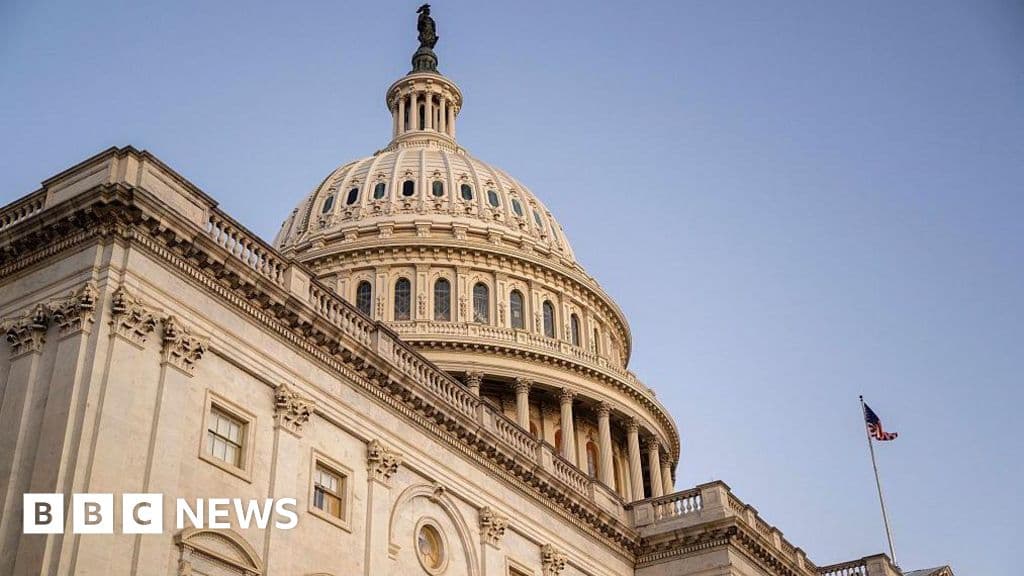
In the intricate landscape of global geopolitics and domestic constitutional architecture, a recent development in the United States Senate has cast a long shadow over the delicate balance of war powers. A bipartisan resolution aimed at curtailing the executive branch's authority to engage in military action in Iran without explicit congressional approval failed to pass, signaling a critical juncture in the ongoing debate over presidential prerogative versus legislative oversight. This decision, emerging amidst escalating tensions and sustained US military operations, underscores the enduring challenges of defining and enforcing the constitutional framework governing the deployment of force, particularly in an era of fluid international conflicts.
The vote, which saw the measure rejected by a margin of 53-47 largely along party lines, illuminates deep-seated divisions within American political thought regarding the appropriate checks and balances on executive power. For EverGreen, an architectural and intellectual journal, this episode offers a profound case study in the structural integrity of democratic institutions and the constant stress tests they undergo in times of crisis. It compels us to examine not just the immediate military implications but also the philosophical underpinnings of collective security decisions and the evolving interpretations of foundational legal documents.
The Senate's Deliberation: A Test of Constitutional Design
The core of the debate revolved around the War Powers Resolution of 1973, a landmark piece of legislation enacted in the wake of the Vietnam War to reassert Congress's constitutional role in authorizing military engagements. This Act mandates that the President notify Congress within 48 hours of deploying armed forces and requires congressional authorization for military action beyond 60 days. Proponents of the recent resolution argued that President Trump's administration had circumvented this vital mechanism, initiating military operations in Iran with shifting justifications and insufficient consultation.
Democrats, led by figures like Senate Democratic leader Chuck Schumer, vociferously contended that the executive branch had sidelined Congress, pushing the nation towards another protracted conflict in the Middle East without a clear strategy or an off-ramp. Their appeals frequently invoked a public weary of "forever wars," questioning the wisdom of unilateral executive action. Conversely, a majority of Republican senators, including figures like Susan Collins, argued against the resolution, asserting that such a measure would send a damaging signal of disunity and weakness to adversaries, particularly Iran, and undermine the morale of US service members actively engaged in operations. The perceived need for unequivocal support for troops, coupled with ongoing consultations with the administration, became a pivotal counter-argument.
Bipartisan Divergence: Cracks in Party Lines
While the vote largely cleaved along partisan lines, notable defections highlighted the complexity of the issue. Democratic Senator John Fetterman opposed the measure, while Republican Senator Rand Paul voted in favor of it, demonstrating that principled stands on constitutional authority or strategic priorities can occasionally transcend party discipline. These cross-aisle votes, though few, underscore the enduring individual conscience within the legislative body, even amidst intense political polarization. The nuanced positions adopted by some senators reflect the genuine internal struggle to reconcile national security imperatives with the fundamental principles of democratic accountability and shared governance.
The administration's stance, articulated by Secretary of State Marco Rubio, echoed a long-standing executive branch position that the War Powers Act itself is unconstitutional. Rubio contended that no presidential administration, regardless of party, has ever fully accepted the Act's legitimacy, suggesting a persistent executive-legislative tension that predates the current presidency. This argument frames the current dispute not merely as a clash over policy, but as a fundamental disagreement over the very foundations of presidential authority in foreign policy – a persistent structural fault line in American constitutional law.
The Historical Context: Echoes of Past Conflicts and War Powers Resolution Challenges
The 1973 War Powers Resolution emerged from a period of profound national introspection following the Vietnam War, a conflict that many believed exemplified executive overreach in deploying military force. Its intent was clear: to ensure that future decisions of war and peace would be a shared responsibility, reflecting the wisdom and deliberation of the elected representatives of the people. However, its effectiveness has been consistently challenged. Successive administrations, regardless of political affiliation, have frequently bypassed or offered alternative interpretations of its provisions, creating a de facto expansion of presidential authority in foreign policy.
A particularly salient example of this structural erosion is the Authorization for Use of Military Force (AUMF) passed in 2001 in the immediate aftermath of the 9/11 attacks. This broad authorization has since been invoked by multiple administrations to justify a wide array of military actions across the Middle East and beyond, often in contexts far removed from its original intent. Efforts to repeal or significantly amend this AUMF have repeatedly failed, highlighting Congress's own struggle to reclaim its constitutional prerogatives and adapt its oversight mechanisms to the evolving nature of global threats and warfare. The reluctance to revoke existing authorizations suggests a deep institutional inertia, compounded by the political risk of appearing to undermine national security in an unstable world.

Executive Precedent and the Shifting Sands of Authority
President Trump's administration, like others before it, has frequently asserted extensive executive authority in military matters. Past actions, such as US strikes against Iranian nuclear facilities or operations targeting foreign leaders without explicit congressional approval, serve as precedents for the current approach. The argument often rests on the notion of inherent executive power to protect national interests and respond to threats, particularly in situations requiring speed and secrecy. While the administration maintained that it complied with the 48-hour notification requirement to congressional leaders prior to the initial strikes in Iran, it simultaneously argued that such notification was not strictly necessary, further underscoring its expansive view of presidential war powers.
This dynamic creates a feedback loop: each presidential action taken without explicit congressional authorization further entrenches the precedent for future executive actions, gradually chipping away at the legislative branch's constitutional role. The continuous cycle of executive action and congressional debate over its legitimacy forms a critical architectural challenge to the balance of power, forcing a re-evaluation of how democratic societies authorize and oversee military force in the 21st century.
The Broader Geopolitical Canvas: Escalation and Strategic Ambiguity
The Senate's vote occurs against a backdrop of intensifying conflict in the Middle East. The commencement of US and Israeli strikes against Iran, followed by retaliatory actions from the Islamic Republic against Israel and US-allied states in the Gulf, signals a dangerous trajectory. The prospect of an extended engagement, with Defence Secretary Pete Hegseth suggesting a duration significantly longer than initially indicated by President Trump, amplifies the urgency of congressional oversight and strategic clarity.
The lack of a clear "off-ramp" in the ongoing hostilities raises profound questions about the strategic objectives and long-term implications of current US policy. Without robust congressional deliberation, the nation risks drifting into open-ended conflicts with ill-defined goals, further exacerbating regional instability. The intellectual challenge for policy architects lies in designing an approach that effectively addresses national security concerns while upholding democratic principles and avoiding the pitfalls of previous interventions.
The Future of Congressional Oversight and Democratic Accountability
The failure of the war powers resolution in the Senate highlights the significant hurdles facing efforts to restore congressional primacy in matters of war and peace. While the legislation is poised for a vote in the House of Representatives, where it faces an uphill battle, the Senate's decision is a potent indicator of the current political climate. For the intellectual discourse fostered by EverGreen, this episode serves as a powerful reminder of the ongoing tension between efficacy in foreign policy and the imperative of democratic accountability. How can a nation effectively respond to complex global threats while ensuring that the profound decision to wage war truly reflects the will and deliberation of its people's representatives?
The answer lies not just in legislative text but in the political will of Congress to assert its constitutional authority, and in the executive branch's willingness to respect those checks and balances. It demands a renewed commitment to open dialogue, strategic foresight, and a shared understanding of the long-term consequences of military action. As the global security environment continues to evolve, the architecture of power – the constitutional framework defining who can declare and conduct war – will remain a central pillar of democratic governance, perpetually in need of careful maintenance, principled defense, and adaptive re-evaluation to ensure its enduring strength and relevance.
The rejection of the resolution in the Senate is not merely a procedural outcome; it is a critical moment in the ongoing narrative of American constitutionalism and its application in foreign policy. It forces a contemplation of the actual 'design' of war-making authority within a democratic republic, challenging us to consider whether the current framework adequately serves the interests of the nation and its commitment to deliberative governance in an increasingly volatile world. The implications of this vote will undoubtedly resonate, shaping not only the immediate conflict but also the long-term structural integrity of American democratic institutions.