The End of an Era: Navigating the Post-Khamenei Landscape in Iran
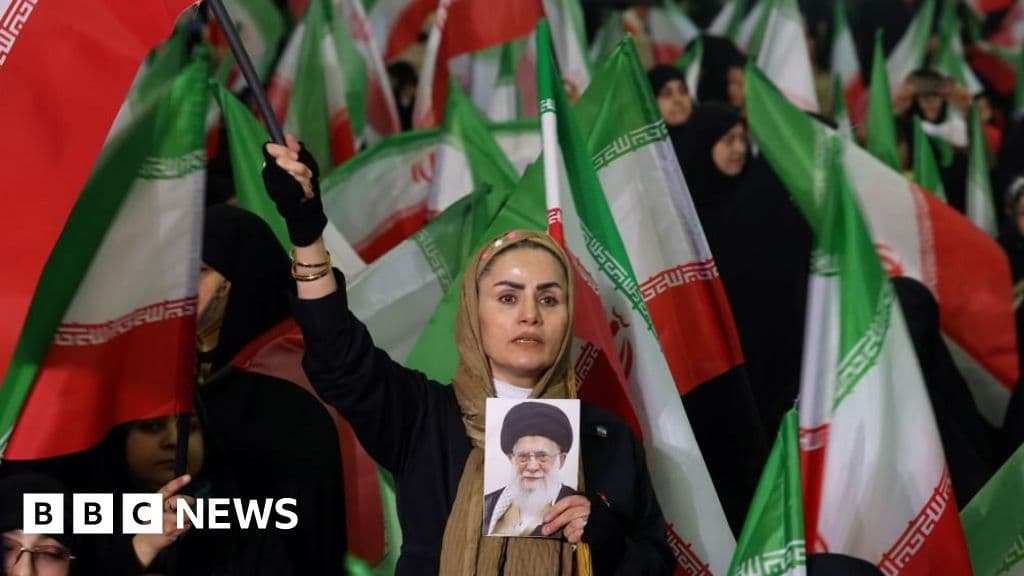
Ayatollah Ali Khamenei's passing marks a seismic shift in Iranian geopolitics. Explore the legacy of his 36-year rule, the intricate succession dynamics, and the profound implications for Iran's future and regional stability.
A profound tremor has rippled through the geopolitical landscape of the Middle East, marking the end of Ayatollah Ali Khamenei’s formidable 36-year tenure as Iran's Supreme Leader. This pivotal moment, confirmed amidst initial denials and conflicting reports, ushers in an era of profound uncertainty and intense scrutiny for the Islamic Republic.
The initial hours following reports of the strike on his compound were characterized by a veil of secrecy, a familiar tactic in times of crisis. While state media initially maintained silence, eventually announcing his 'martyrdom' with solemn dignity and declaring forty days of national mourning, parallel narratives quickly emerged. Reports from Western officials and media outlets, citing compelling evidence, underscored the gravity of the situation. Simultaneously, contrasting scenes unfolded across Iran and within its diaspora, with some communities expressing overt jubilation, a poignant testament to the deeply polarized sentiments surrounding his hardline rule.
<h2>Khamenei's Legacy and the Seeds of Succession</h2> Ayatollah Khamenei presided over an Iran deeply suspicious of the West, particularly the United States, and overtly hostile towards Israel. His rule was characterized by an unyielding grip on power, systematically quashing internal reform movements and waves of public protest. The latter years of his leadership saw escalating direct military engagements with regional adversaries and intensifying domestic discontent, marking his most challenging period. The raw pain and anger from a severe security crackdown, reported to have claimed thousands of lives, still resonated within the country just weeks prior to his passing.
Yet, this moment, while sudden, was not entirely unforeseen within the inner sanctums of Iran's clerical and military elite. The experience of the 12-day conflict last June, which saw Israel target and eliminate numerous nuclear scientists and senior security officials, served as a stark reminder of the Supreme Leader’s own vulnerability. During this period, Khamenei, reportedly operating from a secure bunker, was said to be actively preparing contingency plans, including lists of officials ready to assume critical roles to avert any power vacuum. Moreover, instructions had reportedly been issued to the Assembly of Experts – the 88-member body of senior clerics responsible for electing the Supreme Leader – to be fully prepared for any eventuality, even identifying potential successors.
<h2>The Architecture of Transition: Who Governs Next?</h2> The question of succession has long been a subject of intense speculation, with figures such as his son, Mojtaba Khamenei, frequently mentioned. The institutional framework for this transition is designed for continuity, with the Assembly of Experts poised to convene. The immediate imperative for Iran's remaining powerful clerics and military commanders, particularly within the influential Islamic Revolutionary Guards Corps (IRGC), will be to project an image of unwavering control and a seamless transfer of power to both domestic and international audiences.
However, the sudden departure of a figure who embodied the very essence of the Islamic Revolution for over three decades will undoubtedly send shockwaves through his support base. While the overarching goal of any successor will remain the survival and perpetuation of the current clerical and security apparatus, the path forward is fraught with complexity. The global community now watches intently, questioning whether a change at the apex of power could signify a broader shift in direction for the 47-year-old Islamic Republic, or if the deeply entrenched structures will merely reinforce the existing order. The unfolding chapters of this geopolitical narrative promise to be as unpredictable as they are perilous.
"Architectural silence is often the most profound statement a structure can make. It creates space for the mind to breathe."— The EverGreen Compendium
Comments
No comments yet. Be the first.