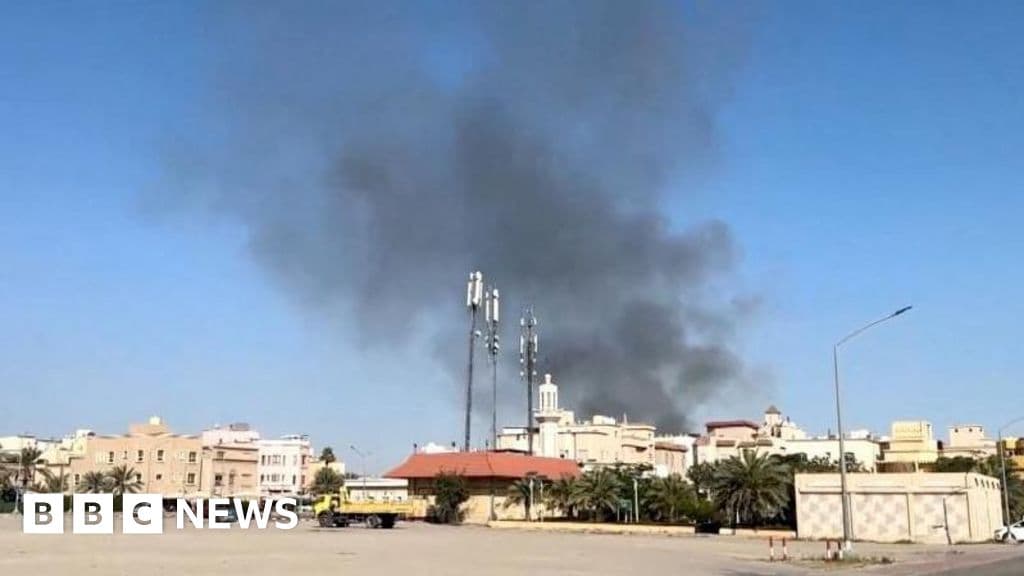
A recent strike on a US military facility in Kuwait, targeting a 'fortified tactical operations centre,' prompts an urgent intellectual inquiry into the efficacy of modern defensive architecture.
In an increasingly volatile world, the discourse around architectural design extends far beyond aesthetics and functionality to encompass the critical realm of security and resilience. The recent incident in Kuwait, where a military facility sustained a direct hit from an Iranian missile, claiming the lives of six American soldiers, serves as a stark reminder of the perpetual challenge in constructing enduring protective environments against evolving threats.
Originally reported as a strike against a 'fortified tactical operations centre,' the subsequent revelations have opened an intellectual inquiry into the efficacy of contemporary defensive architecture. This event, marking the first confirmed fatalities for the US military in the current regional conflict, compels architects, urban planners, and defense strategists to re-evaluate the very foundations of security design.
The Unforeseen Vulnerability: Design Under Duress
Reports indicate that the targeted structure, despite being described as fortified, was in fact a makeshift office space – a trailer shielded by 12-foot (3.7m) steel-reinforced concrete barriers. This detail is pivotal. While concrete barriers offer a degree of protection, the integration of a non-permanent, arguably less robust, structure within a critical operations zone raises profound questions about design compromises made under operational pressures.
The very concept of 'fortification' implies a robust, meticulously engineered defense designed to withstand specific threats. The successful evasion of air defenses by a 'powerful weapon' and its direct impact on a presumed secure facility underscores the immense pressure placed on architectural solutions in active conflict zones. It highlights a critical intersection where strategic military objectives clash with the practicalities and limitations of built environments.
Analyzing Defensive Architecture: Beyond the Barrier
For centuries, military architecture has been a crucible for innovation, from medieval castles to modern bunkers. The challenge has always been to create structures that deter, deflect, or absorb hostile forces. In this incident, the 'makeshift' nature of the office within a fortified perimeter suggests a potential disconnect between the overall defensive strategy and the specific vulnerabilities of critical internal spaces. Was the layering of defenses insufficient? Were the material specifications for the internal structures overlooked in the haste of deployment?
The incident prompts an examination of current design philosophies for critical infrastructure in high-risk environments. It’s not just about the outer shell; it’s about the holistic resilience of the entire system, from structural integrity to internal layout, and the dynamic threat assessment that informs these decisions. The effectiveness of steel-reinforced concrete, while formidable against certain projectiles, can be critically compromised by the type of weapon, its trajectory, and the specific structural context it impacts.
Geopolitical Contours: Architecture in a Shifting Landscape
Kuwait, a key US ally, hosts over 13,000 American soldiers, underscoring the deep-seated defense relationships in the Gulf region. This event is not isolated; it occurs amidst broader regional tensions where allied nations, including Bahrain, UAE, Saudi Arabia, Oman, and Qatar, have also faced missile strikes. This escalating geopolitical landscape places an unprecedented demand on architectural resilience.
Architects and engineers involved in designing such facilities must contend with a rapidly evolving threat matrix. The proliferation of advanced weaponry, coupled with sophisticated delivery mechanisms, necessitates a continuous re-evaluation of established protective measures. The incident serves as a grim reminder that static architectural solutions may struggle against dynamic, technologically advanced adversaries.
Lessons for Resilient Design: Building for Tomorrow's Challenges
While the immediate focus remains on military installations, the lessons gleaned from this incident resonate across all sectors concerned with security and resilience. From critical civilian infrastructure to urban planning in vulnerable regions, the principles of robust, adaptable, and holistically integrated defensive design are paramount.
The tragedy in Kuwait underscores the importance of:
* **Integrated Threat Assessment:** Moving beyond generic defenses to tailor architectural responses to specific, evolving threats.
* **Material Science Innovation:** Continuously exploring and implementing advanced materials and construction techniques that offer superior protection against novel weapons.
* **Holistic System Design:** Ensuring that every component of a facility, from external perimeters to internal workspaces, contributes to overall resilience, eliminating unforeseen weak points.
* **Adaptability and Upgradeability:** Designing structures that can be rapidly upgraded or reconfigured to counter new threats without compromising core functions.
As architects and intellectuals committed to shaping the built environment, EverGreen believes this incident, though tragic, offers a crucial opportunity for introspection. It compels us to push the boundaries of design, to innovate with greater urgency, and to ensure that the structures we erect are not merely functional or beautiful, but truly resilient bastions against the unforeseen challenges of the 21st century."Architectural silence is often the most profound statement a structure can make. It creates space for the mind to breathe."
— The EverGreen Compendium