A recent divergence in US-UK foreign policy over Iran reveals the shifting architecture of the Anglo-American special relationship, challenging traditional alliance dynamics and spotlighting the complex interplay between national interest, historical lessons, and geopolitical strategy in a multipolar world.
The enduring Anglo-American ‘special relationship’ has long been a cornerstone of global stability and a testament to shared values and strategic alignment. However, recent developments surrounding a complex geopolitical flashpoint in Iran have brought into sharp relief the evolving dynamics of this critical alliance. A divergence in strategic calculus between Washington and London has sparked considerable debate, prompting an intellectual inquiry into the very architecture of international cooperation in a multipolar world.
A Fissure in Strategic Alignment: The Iran Question
At the heart of the current tension lies the United Kingdom's decision to abstain from initial joint US-Israeli military actions against Iran. While UK Chief Secretary to the Prime Minister, Darren Jones, maintains that the operational relationship remains robust, with British fighter jets continuing support in the Middle East and ongoing intelligence-sharing, the political chasm has become undeniable.
Sir Keir Starmer's Doctrine: Sovereignty and the Lessons of History
Prime Minister Sir Keir Starmer has articulated a foreign policy rooted in the principle of national interest and a cautious approach to intervention. His stance – “the UK government does not believe in regime change from the skies” – directly reflects a profound engagement with the ‘lessons of Iraq’. The disputed legality and long-term consequences of the 2003 US-led invasion, heavily supported by the UK, loom large in contemporary British foreign policy discourse. Starmer emphasizes the necessity of a lawful basis and a viable, achievable plan for any military engagement, advocating for a principled rather than purely transactional foreign policy.
American Discontent: The Geopolitics of Expectation
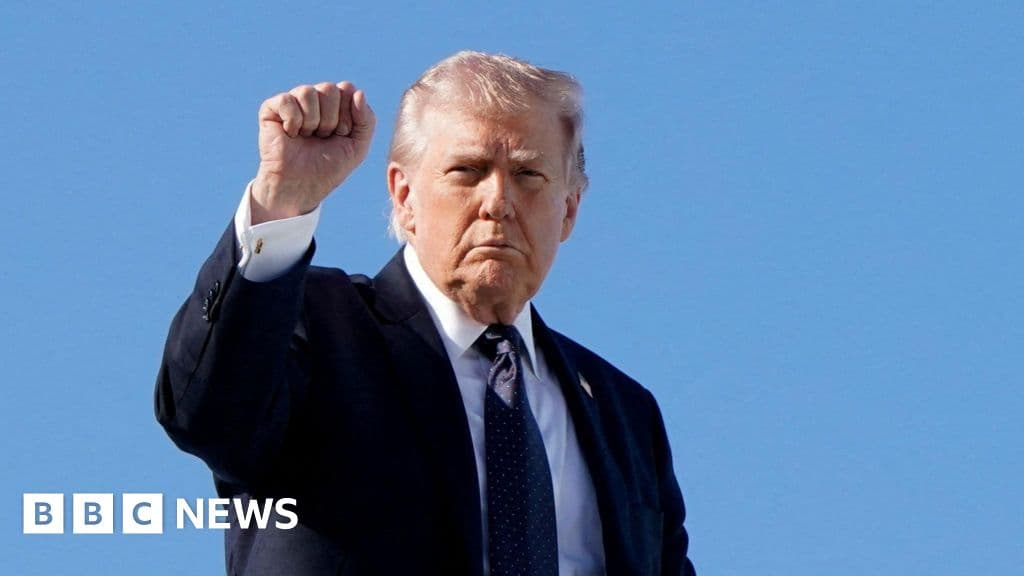
President Donald Trump's unequivocal criticism of Sir Keir Starmer underscores the American perspective, where alliance solidarity is often measured by immediate support for strategic actions. Trump expressed a profound sense of disappointment, viewing the UK’s non-participation as a fundamental shift in the relationship. His remarks, “It’s very sad to see that the relationship is obviously not what it was,” signal a re-evaluation from Washington's side, suggesting that traditional expectations of unwavering support are being challenged by evolving global realities and domestic political pressures within the UK.
Navigating the Complexities of Alliance in a Multipolar World
The immediate fallout saw Iran's retaliatory strikes across the region, prompting the UK to subsequently grant the US access to British bases for “defensive” operations. This nuanced response highlights the delicate balance between upholding national sovereignty, responding to direct threats to citizens and interests, and maintaining the viability of crucial alliances.
Operational Continuity vs. Policy Divergence
The insistence on continued operational collaboration by UK officials, even amidst political disagreement, points to a sophisticated attempt to compartmentalize different facets of the alliance. This strategy aims to preserve the functional aspects of defence and intelligence sharing while allowing for independent foreign policy decisions rooted in differing national assessments. It poses a crucial question for the future of international alliances: can deep operational integration coexist with significant policy divergence on critical global issues?
Redefining National Interest
Sir Keir Starmer's invocation of his “duty to judge what is in Britain’s national interest” encapsulates a broader global trend where nations are re-evaluating their commitments through a lens of self-preservation and strategic autonomy. This redefinition is not merely reactive but is an active *architectural* process, shaping new frameworks for international engagement. As global powers like the US outline diverse and sometimes contradictory objectives in a given conflict – from regime change to missile capability destruction – allies are forced to meticulously weigh their own strategic imperatives and ethical responsibilities.
The Future Architecture of Anglo-American Diplomacy
The current episode serves as a powerful case study in the evolving landscape of international relations. It underscores the challenges of maintaining traditional alliances when national interests diverge, historical lessons inform contemporary policy, and domestic political pressures exert significant influence. The Anglo-American relationship, while robust in many operational spheres, is undeniably undergoing a critical recalibration. Its future architecture will likely be defined by a more explicit negotiation of shared strategic objectives versus independent national sovereignty, demanding intellectual rigor and diplomatic dexterity from both sides to ensure its continued relevance in a complex global order."Architectural silence is often the most profound statement a structure can make. It creates space for the mind to breathe."
— The EverGreen Compendium