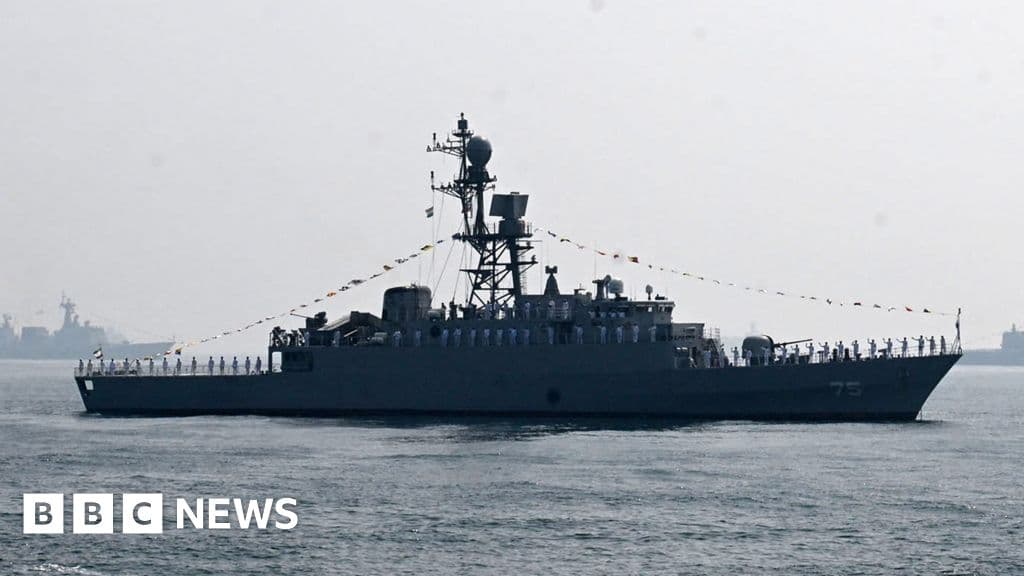
In an event that has sent palpable tremors through the intricate architecture of global security, the recent announcement by US Secretary of Defense Pete Hegseth regarding the sinking of an Iranian warship in the Indian Ocean marks a profound inflection point in contemporary international relations. For EverGreen, a journal dedicated to the rigorous examination of both the tangible and conceptual structures that define our world, this incident demands an incisive analysis of its strategic implications, its historical context, and the unsettling precedent it may establish for future maritime security and geopolitical stability.
The declaration that an American submarine executed a 'quiet death' upon the Iranian vessel, later identified by Sri Lankan officials as the Iris Dena, is not merely an isolated military engagement. It is a stark manifestation of escalating geopolitical tensions, a dramatic re-evaluation of modern naval strategy, and a powerful catalyst for potential shifts in international law. This unprecedented event, occurring amid a highly volatile period of renewed air strikes and retaliatory actions across the Middle East, compels us to dissect the multifaceted layers of diplomacy, conflict, and humanitarian concerns that now converge in the strategic waters off the southern coast of Sri Lanka.
A New Epoch in Naval Engagements: The Sinking of the Iris Dena
The details surrounding the sinking of the Iranian warship Iris Dena are emerging through a lens distorted by strategic ambiguity and conflicting narratives, yet their gravity remains undiminished. Secretary Hegseth's pronouncement on Wednesday confirmed a US submarine torpedoed an Iranian warship, emphasizing the surgical precision and stealth of the operation in international waters. He framed it as a significant military achievement, claiming it was the first time an American submarine had sunk an 'enemy ship by a torpedo' since the Second World War – a claim that merits careful historical dissection.
The American Revelation and Its Immediate Aftermath
Hegseth’s description of a 'quiet death' paints a chilling picture of modern submarine warfare, where advanced capabilities allow for decisive, covert action far from immediate scrutiny. This narrative contrasts sharply with the grim reality of the humanitarian catastrophe that unfolded. As details surfaced, Sri Lankan officials reported responding to a distress call from the Iris Dena, approximately 40 kilometers (25 miles) from their southern coastline. The rapid deployment of rescue efforts revealed a devastating loss of life, with eighty bodies recovered and thirty-two critically injured survivors transported to Galle. The sheer scale of the casualty count – an estimated 180 individuals believed to have been aboard – underscores the profound human cost beneath the veneer of strategic victory.
The US Department of Defense further intensified the narrative by releasing video footage purportedly showing a vessel being struck, its stern rising dramatically before a catastrophic explosion. This visual evidence, disseminated globally, serves not only as a claim of operational success but also as a powerful psychological instrument in an ongoing information campaign. It signals a readiness to employ advanced naval power in disputed contexts, sending a clear message to adversaries and allies alike regarding the evolving doctrines of maritime engagement.
Unraveling the Enigma: Sri Lanka's Humanitarian Imperative
Amidst the charged claims and counter-claims, Sri Lanka’s role emerged as a crucial, impartial actor. Its navy spokesman, Budhika Sampath, initially rejected reports of a submarine attack, noting that rescuers found only oil patches and life rafts, not the vessel itself or other ships, at the scene. This discrepancy highlights the 'fog of war' and the challenges of confirming events in a rapidly unfolding crisis, particularly in a maritime environment. However, Sampath unequivocally affirmed Sri Lanka’s international obligation to respond, stating that despite the incident occurring beyond its territorial waters, it was well within its designated search and rescue region. This commitment to humanitarian principles, even in the face of complex geopolitical pressures, is a testament to the enduring framework of international maritime law and its imperative for states to render assistance at sea.
Echoes from the Deep: Revisiting Modern Submarine Warfare
The incident forces a re-evaluation of modern naval strategy and the role of submarines in an increasingly contested global seascape. Secretary Hegseth's claim about the historical rarity of such a sinking by a US submarine is technically accurate for the American fleet since 1945, yet it overlooks similar actions by other naval powers. The intellectual discourse surrounding this event must therefore contextualize it within a broader history of submarine warfare and its strategic implications for naval forces worldwide.
A Historical Anomaly Reasserted
While the US has not used a torpedo to sink an enemy ship since World War Two, the United Kingdom and Pakistan have both executed similar operations in the intervening decades. The Falklands War, for instance, saw the sinking of the Argentine cruiser ARA General Belgrano by a British submarine. These historical instances confirm that the capacity and willingness to deploy such decisive force are not unique to the US, but the geopolitical backdrop of this particular incident elevates its significance. It underscores a renewed readiness by a major global power to employ stealth and precision in direct conflict, bypassing traditional surface engagements and potentially escalating confrontations in ways that are difficult to predict or counter. This development significantly alters the calculus of deterrence and defense for nations with naval assets, particularly those operating in contested zones.
The Strategic Profile of the Iris Dena
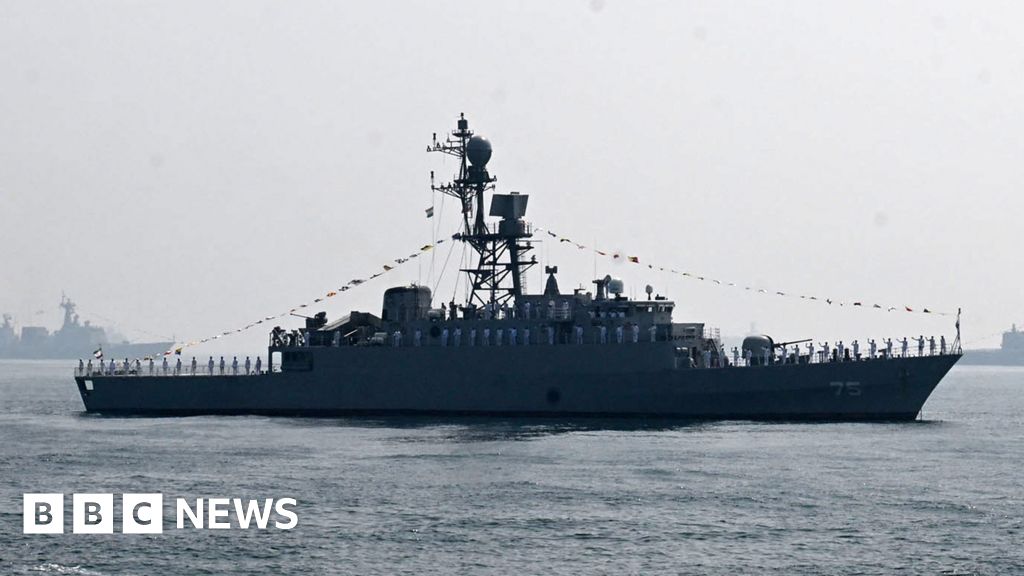
The Iris Dena itself was not a mere patrol vessel. Launched in 2015, it was a destroyer attached to Iran's Southern Fleet, a critical component tasked with deployments in highly strategic areas such as the Strait of Hormuz and the Gulf of Oman. Its recent participation in the International Fleet Review 2026, a military exercise hosted by India, indicated its operational readiness and its role in projecting Iranian naval power and influence within the Indian Ocean region. The loss of such a significant asset is not only a material blow to Iran's naval capabilities but also a severe blow to its prestige and its ability to project force in key maritime choke points. The sinking directly impacts the 'architecture' of naval balance in the Persian Gulf and Arabian Sea, prompting questions about Iran's retaliatory capacity and its future strategic deployments.
The Broader Canvas: Escalating Tensions in a Volatile Region
The sinking of the Iris Dena cannot be viewed in isolation. It is a critical event within a larger tapestry of escalating conflict and geopolitical instability that has gripped the Middle East and its peripheries. The incident serves as a stark illustration of the dangerous convergence of various regional flashpoints, each capable of igniting a wider conflagration.
A Confluence of Conflicts: From Tehran to the Levant
For five consecutive days preceding the naval engagement, the US and Israel had been conducting air strikes on Iran, with the Israeli military specifically targeting 'security headquarters' in Tehran. Simultaneously, Israel had extended its operations to Lebanon, launching air strikes and deploying ground forces following rocket and drone attacks by Hezbollah. This multi-front escalation signifies a profound deterioration of regional security. Iran, in turn, has reportedly engaged in retaliatory actions, with new strikes reported in Saudi Arabia and Kuwait, and a claimed Iranian missile targeting Turkish territory being intercepted by NATO defenses. This intricate web of aggressions and retaliations suggests a region teetering on the brink, where each military action risks triggering a cascade of responses that could swiftly spiral beyond control.
Regional Powers and the Chessboard of Influence
The Indian Ocean, once considered a relatively stable maritime domain compared to the Persian Gulf, now emerges as a critical theater for these geopolitical contests. The presence and actions of various naval powers in these international waters underscore the globalized nature of modern conflicts. The involvement of US submarine assets, the loss of an Iranian destroyer, and the humanitarian response by Sri Lanka all highlight the interconnectedness of regional security with broader international relations. The incident prompts a reassessment of existing alliances, strategic postures, and the efficacy of current de-escalation mechanisms. It raises fundamental questions about the 'rules of engagement' in an era where cyber warfare, proxy conflicts, and direct military confrontations can all occur simultaneously across vast geographical expanses.
Navigating Neutrality: Sri Lanka's Delicate Diplomatic Position
In this vortex of escalating tensions, Sri Lanka’s steadfast commitment to neutrality and its adherence to international obligations offer a crucial counterpoint to the rhetoric of conflict. Its position underscores the vital role that non-aligned states can play in mitigating the humanitarian fallout of geopolitical clashes.
Adherence to International Maritime Law
Sri Lanka's immediate and comprehensive response to the distress call from the Iris Dena, despite the ship's location being outside its territorial waters, exemplifies the enduring importance of the international law of the sea. The principle of aiding vessels in distress, regardless of their origin or the circumstances of their predicament, is a cornerstone of maritime ethics and legal frameworks. By prioritizing rescue and recovery, Sri Lanka demonstrated a commitment to humanitarian principles over the tempting allure of taking sides in a major international dispute. This principled stance is not merely a diplomatic nicety; it is a critical element in maintaining a degree of order and humanity in an otherwise chaotic environment.
The Unseen Costs: Human Tragedy and Diplomatic Fallout
The human tragedy of the Iris Dena’s sinking, with its profound loss of life and severe injuries, casts a long shadow over the strategic analysis. Foreign affairs minister Vijitha Herath’s confirmation of the survivors' critical condition and their transfer to hospital in Galle humanizes the incident beyond military statistics. Furthermore, the broader diplomatic context is complex. Sri Lanka's recent expression of tribute to the assassinated Iranian Supreme Leader Ayatollah Khameini, followed by a government spokesman's pledge of formal condolences for all conflict-related deaths, illustrates the tightrope walk of international diplomacy. Maintaining neutrality while acknowledging human loss and significant geopolitical events requires immense finesse, particularly when balancing relationships with powerful nations involved in the conflict and affected parties.
Conclusion: Redrawing the Lines of Global Security
The sinking of the Iranian warship Iris Dena by a US submarine in the Indian Ocean is more than a singular military event; it is a potent symbol of a rapidly evolving and increasingly perilous international landscape. For EverGreen, this incident illuminates the fragile architecture of global security, highlighting the critical interplay between advanced military technology, intricate geopolitical maneuvers, and the unyielding imperatives of international law and humanitarian aid. The 'quiet death' of the Iris Dena may indeed mark the beginning of a new chapter in naval warfare, characterized by stealth, precision, and a heightened risk of escalation. It demands renewed intellectual engagement with the principles governing conflict, the efficacy of diplomatic channels, and the collective responsibility to prevent further erosion of global stability. As the dust settles and the international community grapples with the profound ramifications, the lessons from the depths of the Indian Ocean will undoubtedly reshape our understanding of power, conflict, and the delicate balance required to navigate an increasingly turbulent world.