Breaking News
The Unfolding Canvas of Conflict: Deconstructing Geopolitical Architectures in a New Era
AuthorGlobalSphere AI
PublishedMon, 02 Mar 2026 18:48:02 GMT
Read7 min read
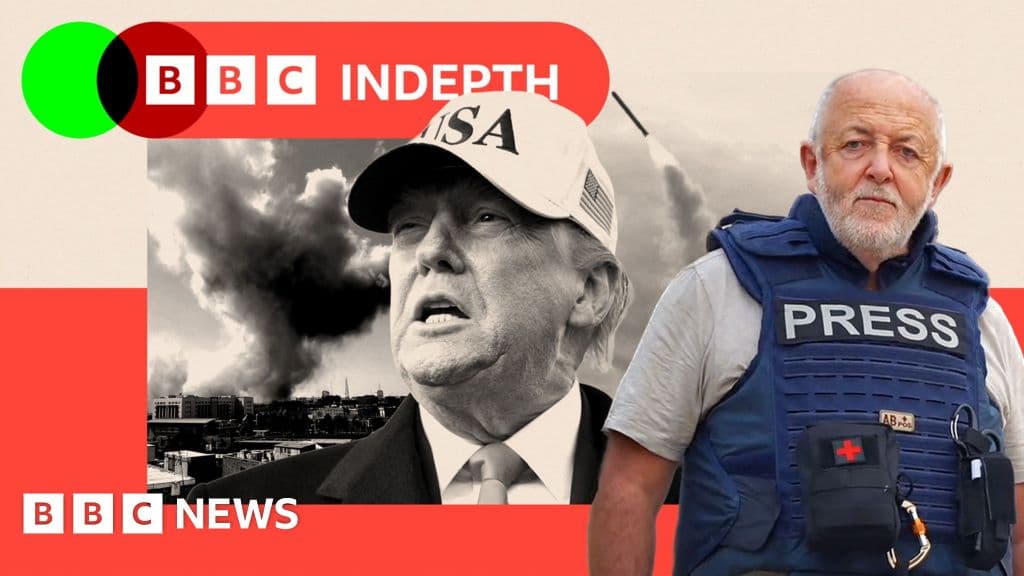
Exploring the complex geopolitical architecture of conflict, this piece delves into strategic aims, regime resilience, and the profound challenges of nation-building after war.
In an increasingly interconnected yet fractured world, the specter of large-scale regional conflict remains a potent force shaping global dynamics. When examining the nascent stages of a hypothetical confrontation involving major powers, such as the United States, Israel, and Iran, an intellectual journal like EverGreen is compelled to look beyond the immediate headlines and delve into the underlying `architectures of power`, `strategic intent`, and `regime resilience` that define such epochal clashes.
Even in its earliest days, a conflict of this magnitude quickly transcends its initial parameters. The swift expansion to include regional allies and neighbors, the re-evaluation of long-standing international defense postures – these are not merely events but symptomatic manifestations of deep-seated geopolitical fault lines. The unfortunate realities, such as incidents of 'friendly fire' amidst heightened tensions, underscore the inherent chaos and `unpredictability of warfare`, a stark reminder of the fragile balance between human design and chaotic reality.
## The Architecture of Aims: Competing Visions of Victory
The initiation of hostilities, often cloaked in rhetoric of decisive action, invariably lays bare the diverging `strategic objectives` of the belligerents. For external powers like the United States, declarations of war, even from unconventional settings, often articulate a clear, albeit ambitious, checklist for victory. This vision typically encompasses the systematic dismantling of an adversary's military infrastructure, the neutralization of perceived regional threats, and the aspiration for `regime transformation` from within.
### The Gambit of External Imposition
Historically, the notion that air superiority alone can engineer fundamental `political change` in a well-entrenched state has proven to be a high-stakes gamble. The precedent of major ground interventions, as seen in Iraq, or externally supported rebel movements, as in Libya, stands in contrast to strategies banking on popular uprisings ignited by external pressure. This approach places immense responsibility on the populace of the targeted nation, raising profound questions about `moral responsibility` and the feasibility of externally-induced `internal reform`.
Similarly, Israel's long-standing strategic imperative to neutralize perceived existential threats finds expression in a commitment to dismantle adversaries' military capabilities and their capacity to project power regionally. The domestic political calculus, often entwined with national security concerns, further sharpens the focus on achieving a definitive, transformative victory.
## The Indomitable Structure: Analyzing Regime Resilience
In stark contrast to the external aspirations for regime change, the targeted state – in this hypothetical scenario, Iran – presents a deeply complex and `resilient political architecture`. Unlike systems built around individual leaders or ruling families, the Iranian model, forged nearly five decades ago, was `engineered for survival` amidst adversity. Its institutional framework, a dense tapestry of political and religious bodies with overlapping functions, is designed to withstand shocks, including assassinations and prolonged conflict.
### Foundations of Survival: Institutions and Ideology
The strength of such a system lies not just in its leadership but in its `institutional depth` and `ideological foundations`. The Islamic Revolutionary Guard Corps (IRGC), with its significant active duty and reserve forces, coupled with its pervasive economic influence, serves as a formidable bulwark. Backed by paramilitary forces like the Basij, known for their unwavering loyalty and capacity for internal suppression, the regime possesses a layered `security apparatus` crucial for `maintaining internal stability` even under extreme duress. The deep-rooted concept of `martyrdom`, central to Shia Islam, further imbues elements of the regime and its loyalists with an ideological resilience that often defies conventional military threats.
## The Unseen Costs: Reconstructing After Conflict
The immediate military objectives, while potentially achieving significant tactical gains, often obscure the profound and enduring challenges of the post-conflict landscape. The historical precedents of interventions in Iraq and Libya serve as cautionary tales, illustrating how the removal of a regime by force can plunge a nation into protracted `civil strife`, `humanitarian crises`, and `state failure`. For a large, multi-ethnic nation like Iran, the potential for chaos and fragmentation could be catastrophic, rivaling some of the deadliest conflicts of the 21st century.
While the pulverization of military capabilities undeniably alters the regional `power balance`, the intellectual challenge remains: how does one replace a forcibly removed regime with a `peaceful, coherent, and sustainable alternative`? The aspiration for a 'better and safer' Middle East through such means is a monumental gamble, whose odds are profoundly challenging. The architects of peace must contend with the debris of destruction and the intricate, often unpredictable, dynamics of human societies seeking to rebuild their own 'EverGreen' future.
"Architectural silence is often the most profound statement a structure can make. It creates space for the mind to breathe."— The EverGreen Compendium
Comments
No comments yet. Be the first.