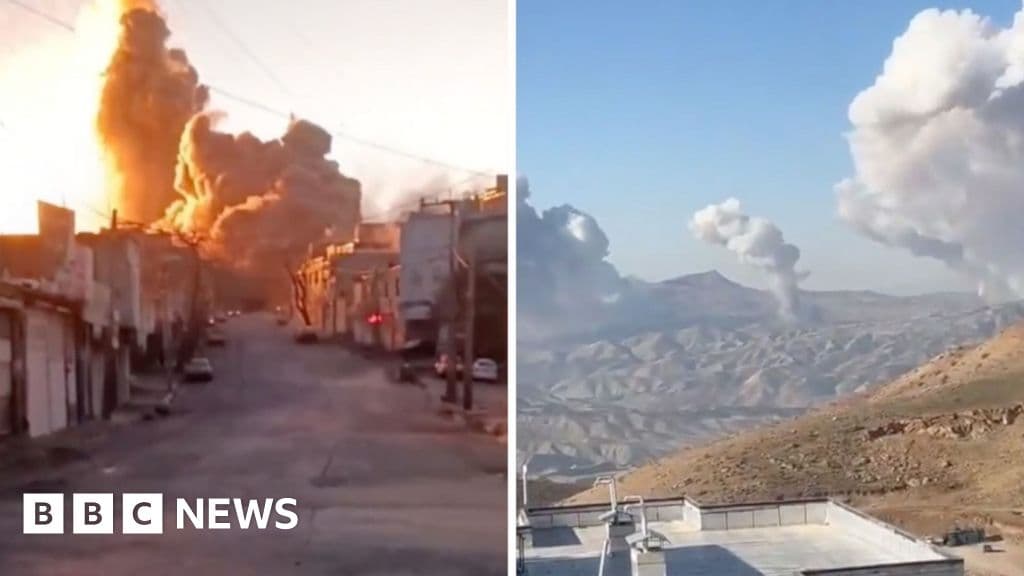
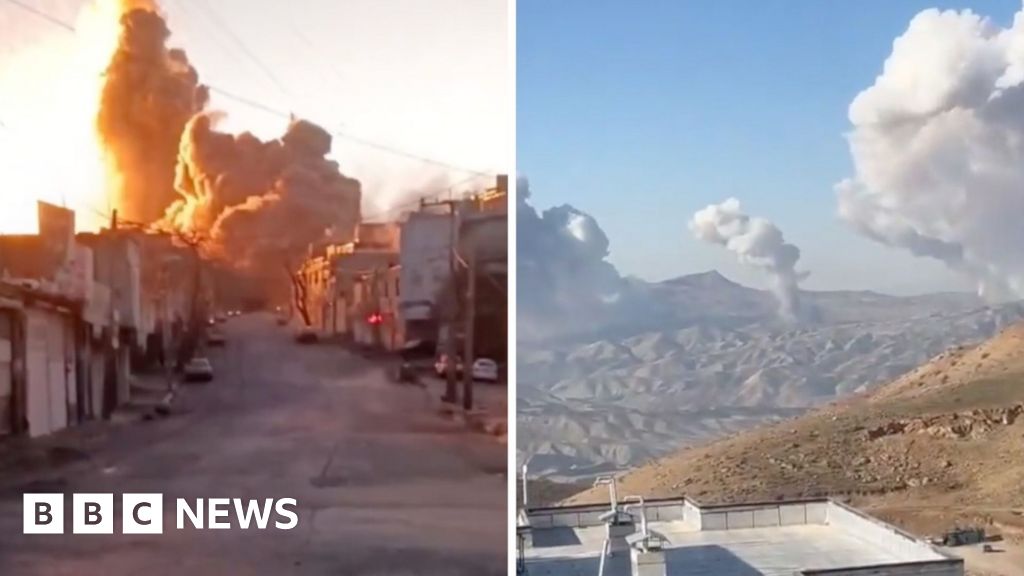
In an era defined by rapid information dissemination and intricate global interdependencies, events that unfold in one corner of the world inevitably send ripple effects across continents. Recent footage, rigorously verified by esteemed news agencies including the BBC, has brought to the fore reports of significant explosions in Iran, following what are understood to be strikes involving the United States and Israel. For EverGreen, an Architectural & Intellectual Journal, this development transcends mere breaking news; it serves as a critical juncture for profound intellectual inquiry into the delicate balance of regional stability, the architectural fabric of societies under duress, and the multifaceted challenges of international security.
This article aims to move beyond immediate reportage, offering a comprehensive analysis of the geopolitical vectors at play. We will explore the historical context, the immediate implications of these verified incidents, and the broader ramifications for urban resilience, future development, and the conceptual architecture of peace in the Middle East. Understanding such events requires a nuanced perspective, acknowledging the complex interplay of state actors, strategic interests, and the profound human and societal costs that underpin every seismic shift in the global order.
The Immediate Spark: Verifying the Unfolding Events
The confirmation of large explosions within Iran, corroborated by multiple reputable international news outlets, marks a significant and concerning escalation in an already volatile region. While the precise nature and targets of these strikes remain subject to ongoing investigation and official statements, the fact of their occurrence, following heightened tensions between Iran, Israel, and the United States, signals a new, dangerous phase in this protracted geopolitical drama. The meticulous process of verifying footage and reports becomes paramount in such moments, counteracting misinformation and ensuring a grounded understanding of reality. This initial verification by independent journalistic bodies is crucial for establishing a credible foundation upon which intellectual analysis and policy discourse can be built.
For analysts and policymakers alike, the immediate focus shifts to assessing the intent behind these actions and the potential for further reprisal. The carefully calibrated responses, or lack thereof, from various capitals will dictate the trajectory of this evolving crisis. The international community watches intently, understanding that any misstep could lead to a broader conflagration with unimaginable consequences for global trade, energy security, and human populations across the region. This incident is not an isolated occurrence but a visible symptom of deeper, unresolved strategic rivalries.
A Nexus of Geopolitical Vectors: Deconstructing the Context
To fully grasp the gravity of these recent events, one must delve into the intricate tapestry of geopolitical vectors that define the Middle East. The relationship between Iran, Israel, and the United States is characterized by decades of animosity, strategic competition, and a complex web of alliances and proxy conflicts. Iran's nuclear program, its regional influence through proxy groups, and its stance against Israel have long been flashpoints. Conversely, Israel views Iran as an existential threat, while the United States has historically sought to contain Iranian influence and prevent nuclear proliferation.
The current situation is also inextricably linked to broader international dynamics, including shifting global power balances and the varied approaches of world powers to regional crises. Each action, each strike, and each diplomatic maneuver is placed within this grand strategic game, often with high stakes for millions of people. Understanding the motivations and strategic calculus of each primary actor is essential for forecasting potential escalations or de-escalations. This intellectual exercise demands an objective assessment, divorcing ourselves from simplistic narratives to appreciate the deep historical grievances and strategic imperatives at play.
The Fragility of Regional Equilibrium
The Middle East operates on a precarious equilibrium, where any significant disruption can cascade into widespread instability. The recent explosions in Iran serve as a stark reminder of this inherent fragility. The concept of deterrence, a cornerstone of international relations theory, is being severely tested. When retaliatory actions become commonplace, the threshold for what constitutes an acceptable escalation lowers, increasing the risk of miscalculation. This continuous cycle of action and reaction can erode the diplomatic space for de-escalation, trapping regional actors in a dangerous loop.
Moreover, the ripple effects extend beyond state-on-state confrontations. Non-state actors, often operating within the grey zones of conflict, can exploit periods of heightened tension to further their own agendas, complicating efforts to restore peace and stability. The economic implications, from oil prices to trade routes, further underscore the interconnectedness of global systems and the immediate impact of regional instability on worldwide markets. Sustaining regional equilibrium requires not only robust diplomatic channels but also a shared commitment to de-escalation, however challenging that may seem amidst deeply entrenched hostilities.
Beyond the Immediate: The Architectural and Societal Repercussions
For an architectural and intellectual journal like EverGreen, the implications of geopolitical tensions extend far beyond the battlefield. While the immediate focus might be on strategic targets, the long-term impact on the built environment and the societal fabric is profound. Even without direct targeting of civilian infrastructure in a specific incident, the constant threat of conflict, economic instability, and the diversion of national resources away from development towards defense inevitably shape the architectural landscape.
In regions grappling with perpetual tension, urban planning must contend with issues of resilience, security, and adaptability. Communities live under the shadow of potential destruction, influencing everything from building codes to the psychological impact on inhabitants. Architects and urban planners are faced with the challenge of designing spaces that can withstand conflict, facilitate recovery, and provide a sense of normalcy and continuity amidst uncertainty. This also extends to the preservation of cultural heritage, which frequently becomes a casualty in prolonged conflicts, erasing layers of history and identity.
The Future of Urban Resilience and Development
The concept of urban resilience takes on a heightened significance in areas prone to geopolitical tremors. How do cities in the Middle East, rich in history and culture, plan for a future where stability is never guaranteed? This involves designing infrastructure that is robust, distributed, and adaptable. It means investing in sustainable development that can absorb shocks and facilitate rapid reconstruction. Furthermore, it necessitates a focus on social infrastructure – schools, hospitals, public spaces – that foster community cohesion and psychological well-being, even when the external environment is hostile. The architectural response to conflict is not merely about rebuilding; it is about reimagining a future of peace, functionality, and human dignity.
Moreover, the diversion of funds from development projects to military spending represents a profound opportunity cost for nations in conflict zones. Resources that could be channeled into housing, education, healthcare, and sustainable infrastructure are instead consumed by the apparatus of war. This stifles innovation, impedes economic growth, and ultimately limits the capacity of a society to build a flourishing, modern architectural legacy. The intellectual challenge for architects and thinkers is to articulate the long-term vision for urban development that can transcend the immediate cycles of conflict and prioritize human flourishing.
The Role of Information in a Fractured Landscape
In the aftermath of events like the explosions in Iran, the information landscape becomes as contested as the physical one. Conflicting narratives, state-sponsored propaganda, and the rapid spread of unverified content on social media pose significant challenges to a clear understanding of events. The ethical responsibility of news agencies, like the BBC, to verify footage and facts becomes paramount. For an intellectual journal, discerning truth from fabrication, and fact from spin, is not just a journalistic duty but an intellectual imperative.
The way information is presented and consumed can dramatically influence public opinion, diplomatic responses, and the overall trajectory of a crisis. Misinformation can inflame tensions, lead to rash decisions, and undermine efforts towards peaceful resolution. Thus, critical analysis of media sources, understanding the biases inherent in reporting, and seeking out diverse perspectives are crucial skills for navigating such complex geopolitical moments. The architecture of informed public discourse is as vital as any physical structure, shaping the foundations of understanding and action.
Conclusion: Navigating Complexity Towards a Sustainable Future
The verified reports of explosions in Iran, attributed to US and Israel strikes, represent a critical escalation in the already complex geopolitical landscape of the Middle East. For EverGreen, these events are not just news, but a call for deeper intellectual engagement. We recognize that the future of this region, and by extension, global stability, hinges on the ability of international actors to navigate these treacherous waters with wisdom, restraint, and a commitment to diplomatic solutions.
The architectural and societal repercussions of prolonged conflict are immense, manifesting in fractured urban environments, stunted development, and profound human suffering. While the immediate challenge lies in de-escalation and preventing a wider conflict, the long-term imperative remains the construction of a durable peace – a peace that can foster resilience, enable sustainable architectural and urban development, and ensure a future where intellectual pursuits and human flourishing can thrive. As these geopolitical tremors continue, the intellectual community must remain steadfast in its pursuit of understanding, critical analysis, and the promotion of pathways towards a more stable and constructive world order.