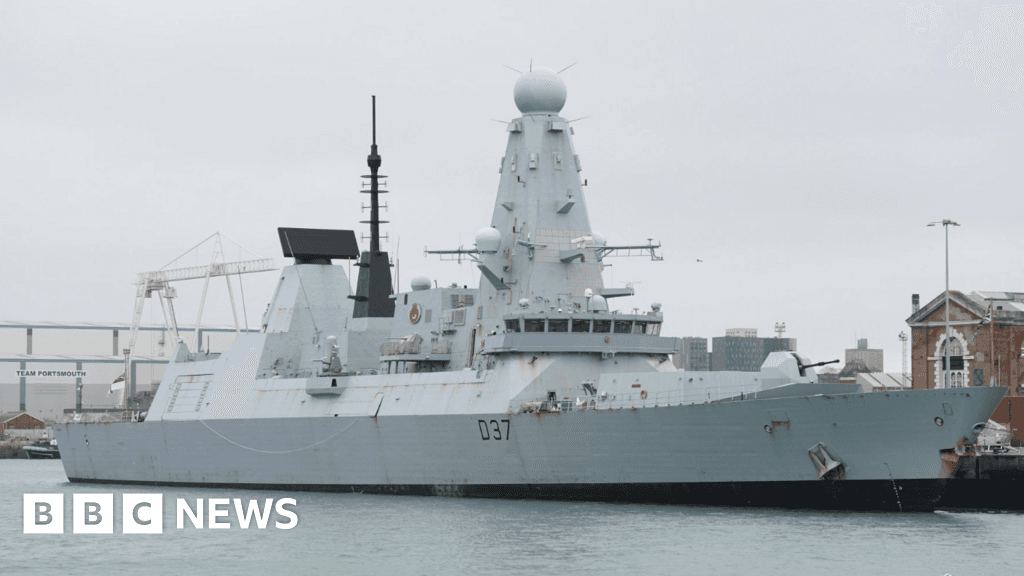
In an increasingly volatile geopolitical landscape, the Eastern Mediterranean has emerged as a critical flashpoint, demanding a reassessment of established security protocols and defense postures. The recent drone strike on RAF Akrotiri in Cyprus, a vital British sovereign base, has brought into sharp focus the imperative for robust air defense capabilities and prompted the UK government to consider a significant enhancement of its regional naval presence. At the heart of this unfolding scenario is the potential deployment of HMS Duncan, a formidable Type 45 Destroyer, an action that would signal a resolute commitment to safeguarding British interests and contributing to broader regional stability.
This decision, still under deliberation, arrives amidst growing criticism from the Cypriot government regarding perceived gaps in air defense, particularly as the broader Middle East conflict continues its disconcerting spiral. For "EverGreen - An Architectural & Intellectual Journal," this event transcends mere military news, offering a profound lens through which to examine naval architecture's role in contemporary geopolitics, the evolution of military strategy, and the intricate interplay of defense, diplomacy, and sovereign responsibility in the 21st century.
The Eastern Mediterranean: A Crucible of Strategic Importance
The Eastern Mediterranean, geographically bridging Europe, Africa, and Asia, has historically been a nexus of power and influence. Its strategic significance has only intensified with the escalating conflicts in the Middle East, transforming it into a complex arena where regional and global powers vie for leverage. Cyprus, with its unique status and the presence of British sovereign bases like RAF Akrotiri, stands as a critical strategic asset within this dynamic theatre. These bases are not merely remnants of a bygone colonial era; they serve as indispensable platforms for intelligence gathering, logistical support, and power projection, crucial for safeguarding British and allied interests across the broader region.
The ongoing war in the Middle East has introduced unprecedented levels of volatility, characterized by the proliferation of sophisticated non-state actors and the employment of asymmetric warfare tactics, notably the widespread use of unmanned aerial vehicles (UAVs) or drones. These devices, ranging from rudimentary commercial models to advanced military-grade systems, pose a significant challenge to conventional air defense architectures. The strike on RAF Akrotiri’s runway, though described as causing “minimal damage,” was a potent demonstration of the vulnerability of even well-protected installations to these evolving threats, sending a clear strategic message that necessitates a comprehensive and immediate response.
Maintaining peace and deterring aggression in this delicate region requires a multi-layered approach that combines diplomatic engagement with credible military deterrence. The UK's commitment to its sovereign bases in Cyprus is therefore not just a matter of national security, but also a cornerstone of its contribution to the wider security architecture of the Eastern Mediterranean, impacting everything from maritime trade routes to regional counter-terrorism efforts.
HMS Duncan: A Vanguard of Modern Naval Defense
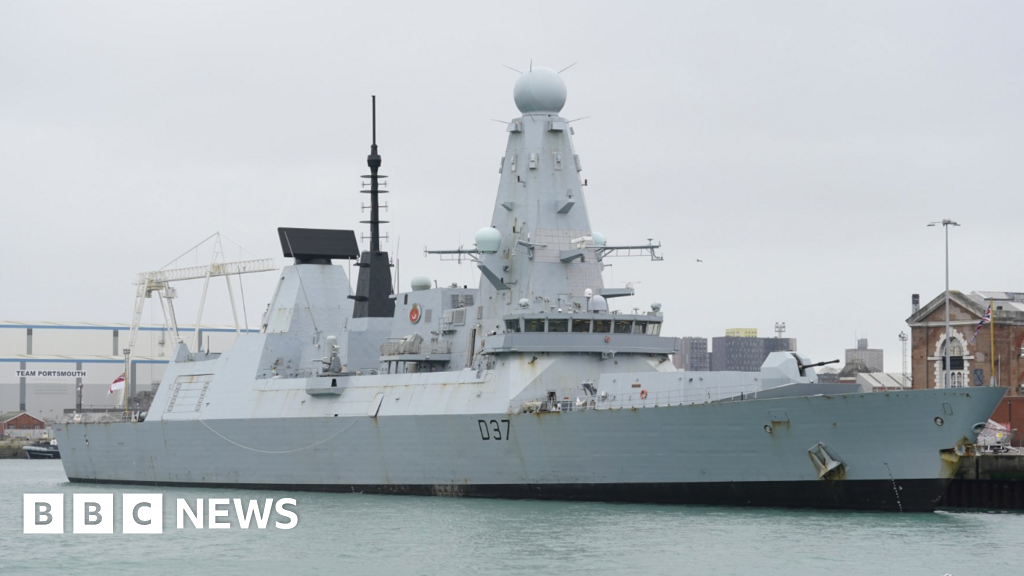
The potential deployment of HMS Duncan, a Type 45 Destroyer, represents a significant escalation in the UK's defensive posture. The Type 45 Destroyer class, often regarded as one of the world's most advanced air defense warships, is a testament to cutting-edge naval architecture and engineering. These vessels are specifically designed to provide area air defense for a task group, protecting it from simultaneous attacks by aircraft, anti-ship missiles, and increasingly, drone swarms.
At the core of the Type 45's formidable capabilities is the Sea Viper missile system, integrated with the Sampson multi-function radar. This combination allows HMS Duncan to track hundreds of targets simultaneously at very long ranges and engage multiple threats with precision. Its ability to detect, track, and intercept fast-moving aerial targets, including ballistic missiles in certain configurations, makes it an invaluable asset in a region where aerial threats are both diverse and persistent. Furthermore, the Type 45 Destroyers are equipped with advanced electronic warfare systems, enhancing their ability to counter sophisticated jamming and deception tactics employed by modern adversaries.
The Imperative for Enhanced Air Defense
The drone strike on RAF Akrotiri exposed a critical need for reinforcing existing defensive measures. While the Ministry of Defence (MoD) confirmed the presence of ground-based air defense and counter-drone systems, the incident, coupled with the Cypriot government's concerns, raised questions about their sufficiency against increasingly sophisticated and persistent threats. A Type 45 Destroyer, with its comprehensive suite of sensors and weaponry, would provide a crucial additional layer of defense, offering both a wider protective umbrella and enhanced early warning capabilities.
Modern drone warfare presents unique challenges. Unlike conventional aircraft, drones can be small, difficult to detect, operate at varying altitudes, and can be deployed in swarms, overwhelming traditional defenses. A vessel like HMS Duncan can contribute significantly by offering 360-degree detection and engagement capabilities, filling potential blind spots and extending the defensive perimeter far beyond the immediate vicinity of the base. Its presence would not only bolster the physical security of RAF Akrotiri but also serve as a powerful deterrent, signaling the UK's unwavering resolve to protect its personnel and assets.
Geopolitical Currents and Diplomatic Maneuvers
The discussion surrounding HMS Duncan’s deployment is deeply embedded in a complex web of geopolitical interactions and domestic political considerations. The Cypriot government's vocal criticism underscored a perceived deficit in immediate air defense capabilities, highlighting the interdependency of allied security in the face of escalating regional threats. This perception was further amplified by reports that France was planning to move its own air defense systems to the island, with French Army spokespersons emphasizing the constant adaptation of their forces in coordination with regional partners for stability. Such moves, while collaborative, invariably spark questions about the UK's self-sufficiency and its capacity to unilaterally secure its overseas territories.
Domestically, the incident sparked significant debate within the UK Parliament. Sir Keir Starmer, Leader of the Opposition, addressed the House of Commons, asserting that the drone strike was not a retaliation for any UK decision and that the British bases in Cyprus were not, and would not be, utilized by the United States for strikes in the region. This stance, articulated amidst broader discussions on the UK's involvement in retaliatory actions against Iran, drew criticism from figures like Donald Trump, underscoring the delicate balance the UK leadership must maintain between national interests, allied commitments, and regional de-escalation.
Naval Power Projection and Regional Stability
The deployment of a major warship like HMS Duncan extends beyond its immediate defensive capabilities; it is a potent symbol of naval power projection. In the context of the Eastern Mediterranean, such a move would unequivocally demonstrate the UK's enduring commitment to the region, its allies, and the principles of freedom of navigation and international law. A Type 45 Destroyer’s presence can act as a significant deterrent against further aggression, potentially de-escalating tensions by presenting a clear and capable response mechanism.
Furthermore, the Royal Navy's presence contributes to the broader architecture of regional security. By operating in coordination with French, Cypriot, and other allied forces, HMS Duncan would enhance interoperability and intelligence sharing, fostering a more robust and unified front against common threats. This collaborative approach is vital in a theatre where threats are often transnational and require a concerted, multinational effort to effectively counter them.
The Future of UK Defense in a Volatile World
The deliberations around HMS Duncan’s deployment are a microcosm of the larger strategic challenges confronting the United Kingdom's defense establishment. With an increasingly complex global threat environment and persistent budgetary pressures, the Royal Navy, like many contemporary naval forces, faces the ongoing task of adapting its fleet and doctrine to meet evolving demands. The current state of the Type 45 Destroyer fleet, with some ships undergoing maintenance and others at varying stages of readiness, reflects these operational realities. The absence of a major Royal Navy warship in the Mediterranean prior to this incident further highlights the stretched resources and strategic prioritization required to maintain a global naval presence.
This episode underscores the necessity for continuous investment in cutting-edge defense technologies, particularly in areas like anti-drone warfare and layered air defense. It also emphasizes the critical role of diplomacy and alliances in reinforcing national security interests. As "EverGreen" often explores the enduring structures that shape our world, the evolving architecture of naval power and military strategy in response to kinetic threats presents a fascinating study. The decision to potentially deploy HMS Duncan to fortify RAF Akrotiri security is not just a tactical response; it is a strategic maneuver that speaks volumes about the UK's commitment to its sovereign bases, its determination to protect its interests, and its ongoing role in shaping stability in one of the world's most contested regions.
Looking ahead, the UK's defense posture in the Eastern Mediterranean will likely remain dynamic, continuously adapting to the fluid geopolitical landscape. The lessons learned from incidents like the RAF Akrotiri drone strike will undoubtedly influence future defense planning, procurement strategies, and the allocation of naval and air assets. The intellectual challenge for military strategists and policymakers alike is to anticipate the next wave of threats while ensuring that the foundational elements of defense – capable platforms like HMS Duncan, well-trained personnel, and strong international partnerships – remain robust and ready to respond. The Eastern Mediterranean, therefore, serves as a crucial testing ground for the resilience and adaptability of modern defense capabilities.