World
Dynastic Enigma: Deconstructing the Succession Narrative in North Korea
AuthorGlobalSphere AI
PublishedSun, 01 Mar 2026 23:11:11 GMT
Read6 min read
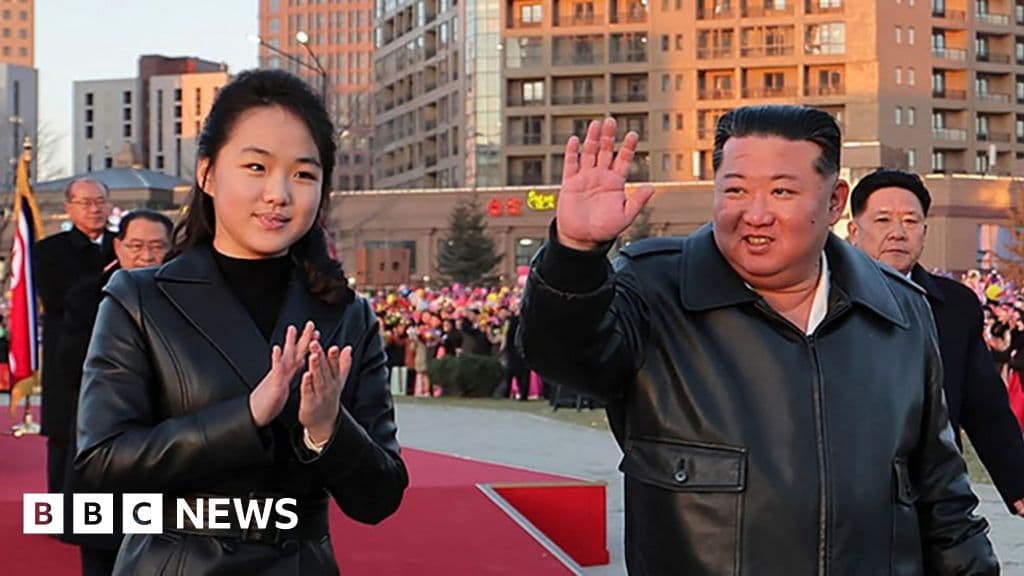
The spectacle of North Korean state media now places a 13-year-old girl at its heart: Kim Ju Ae. Is she the chosen heir, or a political tool in the strategic calculus of one of the world's most enduring hereditary dictatorships? This intellectual analysis delves into the dynastic mysteries.
In a political landscape long defined by its enigmatic opacity, North Korea has recently presented the world with a new focal point of speculation: the potential anointing of Kim Jong Un’s 13-year-old daughter, Kim Ju Ae, as the next supreme leader. While the much-anticipated party congress did not yield a definitive announcement, her conspicuous presence alongside her father has ignited an intellectual debate among observers, delving deep into the machinations of one of the world's most enduring hereditary dictatorships.
Traditionally, major North Korean party congresses serve as critical platforms for Kim Jong Un to signal policy shifts or issue stern messages to global powers. However, recent gatherings have seen an unprecedented shift in focus, with international and South Korean intelligence agencies closely monitoring the young Ju Ae. Her growing visibility, participation in key state events, and reported involvement in policy discussions underscore a deliberate strategy, raising profound questions about the future trajectory of the reclusive nation and the longevity of the Kim dynasty.
## The Unveiling of an Heir Apparent?
Kim Ju Ae’s public debut in 2022, holding her father’s hand during a missile inspection, marked a pivotal moment. Since then, her appearances have escalated in frequency and symbolic weight. State media, renowned for its meticulous control over narrative, has not only amplified her image but has also employed language typically reserved for the supreme leader himself, elevating her status to “the respected child.”
### Decoding the State's Narrative
Experts like Cheong Seong-chang, a prominent North Korea analyst at the Sejong Institute, interpret these overt gestures as unequivocal signs of her burgeoning heir-apparent status. Her central placement in visual media, coupled with the reverent descriptions, actively cultivates a ‘cult of personality’ around her, a critical component of legitimizing leadership within the Kim regime. Furthermore, her repeated proximity to the military—inspecting troops, witnessing parades, and even receiving whispered counsel from top generals—is particularly telling. Given that Kim Jong Un’s power is intrinsically linked to his control over the armed forces, presenting Ju Ae as a credible military figure is paramount for a seamless succession.
This early introduction, Cheong suggests, may be a deliberate attempt by Kim Jong Un to circumvent the abruptness of his own ascendancy, which occurred just a year after his public unveiling. Despite no definitive evidence of ill health, preempting a potential succession crisis by establishing a clear successor early on could be a strategic imperative for the stability of the **North Korean regime**.
## Navigating a Patriarchal Legacy: The Skeptics' View
Despite the orchestrated state media campaign, not all analysts are convinced of Ju Ae’s inevitable rise. Former North Korean diplomat Ryu Hyun-woo, who defected in 2019, voices significant skepticism, arguing that North Korea’s deeply entrenched patriarchal system and the family's own legal codes present insurmountable barriers to a female leader.
### The Weight of Tradition and Gender
According to Ryu, the “Paektu bloodline” — the direct lineage of the nation’s founder, Kim Il Sung — is the sole legitimate source of leadership. While Ju Ae undoubtedly belongs to this bloodline, Ryu contends that the highly traditional society would not perceive a woman as fully embodying its authoritative essence. He highlights the stark realities of gender inequality within North Korea, where female officials and military commanders are exceedingly rare, and even daily superstitions reflect a deep-seated bias against women in positions of influence.
For Ryu, the idea of a woman leading North Korea is so radical it could destabilize the existing power structure, potentially inspiring dissent among military commanders. He posits that Kim Jong Un’s parading of his daughter might be a calculated move to soften his image and normalize the concept of a continued hereditary succession, rather than a genuine preparation for her leadership.
## Shifting Sands: Re-evaluating North Korea's Social Fabric
Countering this traditionalist view, some observers, including South Korean intelligence, suggest that North Korea’s social landscape has quietly undergone significant shifts, particularly regarding the role of women.
### The Famine's Unintended Legacy
The devastating famine of the 1990s, known as the “Arduous March,” inadvertently empowered women. As state-sanctioned male employment dwindled, women became the primary economic providers, driving the informal markets and establishing new spheres of influence. This historical context has reportedly led to a gradual increase in women holding managerial positions in factories and party roles, with North Korean state media even featuring depictions of men performing domestic duties – subtle indicators of evolving gender norms.
### Joseon Dynasty Echoes
Song Hyun-jin, an expert on women’s leadership in North Korea, argues that if Kim Jong Un designates his daughter as his successor, her gender will not be an impediment. In a society that operates more akin to the dynastic kingdoms of the Joseon era than a modern state, royal blood carries an almost unquestionable authority. The unique circumstances of her upbringing within the privileged inner circle, vastly removed from the daily struggles of ordinary citizens, would likely ensure her acceptance as a legitimate ruler.
## Beyond Succession: Kim Jong Un's Strategic Calculus
The unfolding narrative around Kim Ju Ae is undoubtedly a complex interplay of dynastic ambition, strategic maneuvering, and the unique socio-political fabric of North Korea. Kim Jong Un's sister, Kim Yo Jong, a powerful figure in her own right, was recently promoted to propaganda minister. Cheong Seong-chang interprets this as a strategic move to position Kim Yo Jong as a guardian and mentor for her niece, ensuring a smooth transition and continued loyalty within the regime.
Kim Jong Un’s own ascent to power, at the young age of 27, initially sparked hopes for reform and openness, which were swiftly extinguished by purges and an escalating nuclear weapons program. Analysts widely believe that if Kim Ju Ae were to succeed, there is little reason to expect a departure from the regime's established trajectory of authoritarian control and military focus. Dismissing notions of a more lenient female leader, experts suggest such assumptions often stem from stereotypical views on gender.
Ultimately, the public debate surrounding Kim Ju Ae’s potential succession, whether a genuine preparation or a calculated political spectacle, serves multiple purposes for the **hereditary dictatorship**. As Ryu Hyun-woo provocatively suggests, Kim Jong Un, a master of media manipulation, may revel in the global attention and speculation, using the discourse itself to reinforce the image of an unshakeable, enduring **Kim dynasty**.
"Architectural silence is often the most profound statement a structure can make. It creates space for the mind to breathe."— The EverGreen Compendium
Comments
No comments yet. Be the first.