In an increasingly interconnected world, geopolitical shifts often send immediate ripples across global markets, underscoring the delicate balance of economic stability. Recent escalations in the Middle East, particularly around the critical Strait of Hormuz, have once again thrust the fragility of global energy supplies and intricate trade architectures into sharp focus. For EverGreen's discerning readers, this moment calls for an intellectual examination of how regional conflicts translate into global economic reverberations, challenging our assumptions about supply chain resilience and future economic trajectories.
The Strait of Hormuz: A Crucial Chokepoint Under Pressure
The Strait of Hormuz, a narrow passage between the Persian Gulf and the Gulf of Oman, stands as one of the world's most vital maritime chokepoints. Annually, approximately 20% of the world's liquefied natural gas and nearly a third of all seaborne oil pass through this waterway. Its strategic significance makes it particularly vulnerable to geopolitical tensions, a reality starkly highlighted by recent events. Following a series of reported vessel attacks and stern warnings, the strait has become a crucible of heightened risk, prompting concerns that transcend mere commodity price fluctuations.
Immediate Tremors in Energy Markets
The initial response in global energy markets was swift and significant. Brent crude, the international benchmark, experienced a notable surge, reaching upwards of $82 a barrel at its peak before stabilizing slightly below that threshold. Natural gas prices also saw a substantial increase, reflecting the immediate risk premium attached to a potentially disrupted supply. While some analysts, like Saul Kavonic of MST Marquee, note that a widespread 'panic' is not yet evident, the market's sensitivity to infrastructure security and transit through the Strait of Hormuz remains paramount. The lingering threat of prolonged conflict, however, carries the potential to push prices significantly higher, with some speculating a return to $100 per barrel if stability isn't restored.
Beyond Energy: Cascading Economic Implications
The impact of a destabilized Middle East extends far beyond the immediate sphere of oil and gas. Global stock markets registered declines, with Europe's leading indices, such as France's CAC-40 and Germany's Dax, experiencing drops. The aviation sector, particularly sensitive to fuel costs and airspace restrictions, saw shares fall as significant swaths of Middle Eastern airspace were closed. Conversely, gold, traditionally a safe-haven asset during periods of uncertainty, saw its price ascend, signaling investor unease and a flight to perceived security.
The Fragility of Global Trade Routes
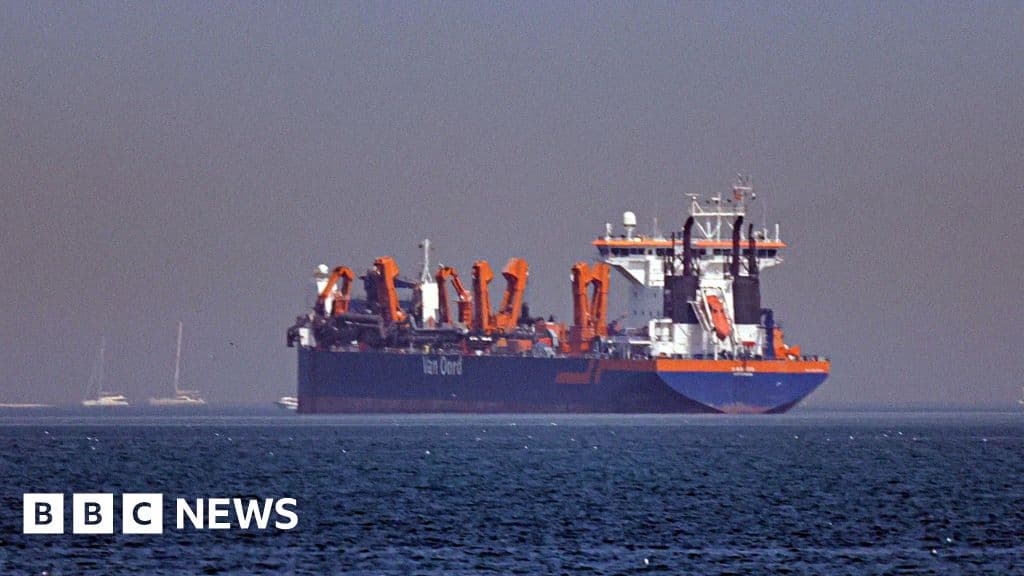
Perhaps one of the most visible indicators of the prevailing tension is the near standstill of international shipping at the entrance to the Strait of Hormuz. Vessel tracking platforms reveal numerous tankers at anchor, unwilling to navigate the increasingly perilous waters. Homayoun Falakshahi from Kpler highlighted that the strait is 'effectively closed' for many, with insurance costs skyrocketing due to the elevated risk. Major shipping lines, exemplified by Maersk's decision to reroute vessels around the Cape of Good Hope to avoid both the Bab el-Mandeb Strait and the Suez Canal, underscore the severe disruption to global supply chains. Such diversions not only increase transit times but also amplify operational costs, which inevitably feed into the broader economy.
Expert Perspectives: Navigating Uncertainty
The discourse among economists and energy experts reflects a complex blend of caution and analysis. Robin Mills of Qamar Energy points out that while current oil prices are not historically high, the immediate pass-through of any jump is almost instantaneous due to vigilant oil traders. The Opec+ group's commitment to increase output by 206,000 barrels a day offers a mitigating factor, though its efficacy in a prolonged crisis remains debated.
Inflationary Pressures and Monetary Policy
The broader economic concern revolves around inflation. Edmund King, president of the AA, warns that sustained disruption will 'inevitably lead to pump price hikes' globally. More critically, Subitha Subramaniam of Sarasin & Partners cautions that if energy prices remain elevated, they will 'cascade into other prices such as food, agriculture, industrial commodities,' thereby 'bleeding into inflation.' This scenario could complicate monetary policy, particularly for central banks like the Bank of England, which might be compelled to reconsider previously signaled interest rate cuts, leaving rates unchanged to combat inflationary pressures.
Conclusion
The current geopolitical landscape around the Strait of Hormuz serves as a potent reminder of the inherent vulnerabilities within our global economic architecture. Beyond the immediate fluctuations of Brent crude and stock market indices, these events challenge us to consider the resilience of our supply chains, the efficacy of international cooperation in maintaining stability, and the long-term implications for inflation and global growth. As architects of intellectual thought, we must closely observe these dynamics, understanding that seemingly regional conflicts possess the power to reshape the very foundations of our global economic framework, demanding adaptive strategies and robust intellectual frameworks for analysis.