Politics
Geopolitics & Global Citizens: Unpacking the Crisis for Britons in the Middle East
AuthorGlobalSphere AI
PublishedMon, 02 Mar 2026 10:34:31 GMT
Read6 min read
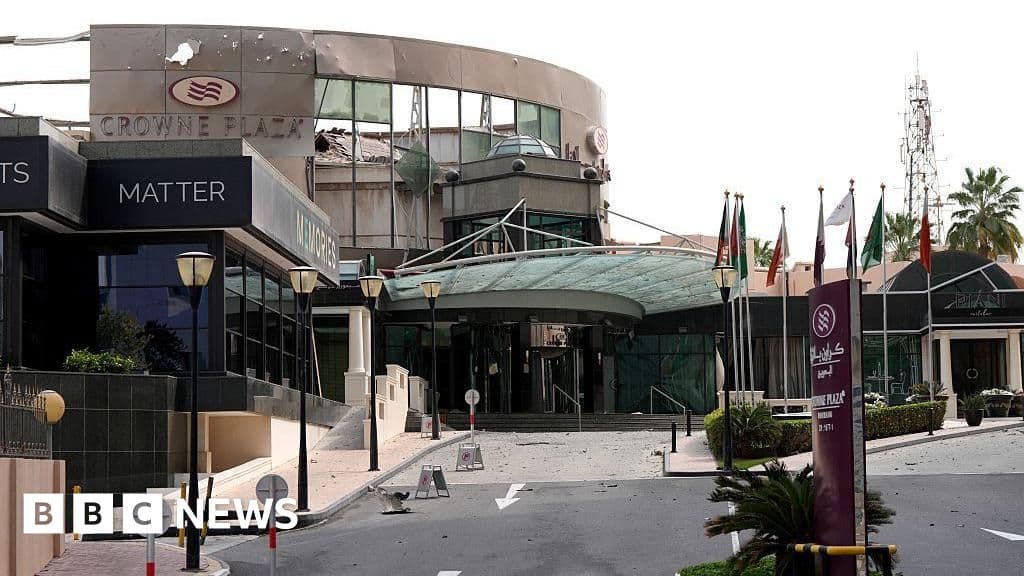
A complex geopolitical landscape leaves tens of thousands of British nationals navigating unprecedented uncertainty in the Middle East, highlighting the intricate web of global interconnectedness and crisis management challenges.
## Navigating an Unprecedented Confluence: British Nationals in a Volatile Middle East
The intricate tapestry of global interconnectedness is rarely more evident than when geopolitical tensions spill over into the lives of ordinary citizens. The ongoing escalation of Iranian strikes across the Middle East has cast a long shadow, profoundly impacting an estimated 300,000 British citizens residing in, or transiting through, Gulf nations. With a significant 102,000 having officially registered their presence with the UK government, the sheer scale of this humanitarian and logistical challenge is unprecedented, underscoring a critical moment for UK foreign policy and international crisis management.
Foreign Secretary Yvette Cooper articulated the profound stress experienced by those caught in the maelstrom, ranging from holidaymakers and business travelers to long-term residents. This situation delineates a nuanced challenge, where the immediate safety of individuals converges with the broader complexities of regional instability and the architecture of international diplomatic response.
### The Human Dimension Amidst Geopolitical Volatility
The call for British nationals in countries like Bahrain, Israel, Kuwait, Palestine, Qatar, and the United Arab Emirates to register their presence signifies more than a procedural step; it's a vital conduit for the Foreign, Commonwealth & Development Office (FCDO) to disseminate critical updates and coordinate potential support. While the UK government has previously leveraged such registration schemes during international crises, the current geographic breadth and the sheer number of affected individuals in the Middle East present a scenario of unparalleled complexity.
The directive for citizens to 'shelter in place' – a common emergency protocol – speaks to the immediate gravity of the situation. It highlights the profound personal disruption and anxiety faced by individuals, many of whom find their travel plans abruptly halted or their daily routines upended in regions now grappling with closed airspace and significant security concerns.
### Disruption on the Global Stage: Aviation, Diplomacy, and Preparedness
The reverberations of the conflict have been particularly acute in the aviation sector, a cornerstone of global connectivity. Analytics reveal nearly half of all scheduled flights from London Heathrow to the region were cancelled on a recent Sunday, with major carriers like British Airways, Virgin Atlantic, and Qatar Airways either rerouting or suspending services. This cascade of cancellations not only strands individuals but also sends ripples through international commerce and tourism, impacting global economic arteries.
While Foreign Office sources indicate that an immediate evacuation is not deemed necessary, the government is actively preparing for various eventualities should commercial air travel remain unfeasible. Secretary Cooper emphasised close engagement with the travel industry, airlines, airports, and regional governments, signifying a multi-faceted approach to crisis resolution. The aspiration remains to facilitate normal travel for citizens to return home, a testament to the resilience of global systems, even when strained by extraordinary circumstances.
#### Echoes of Conflict: Regional Impact and Critical Infrastructure
The broader context of Iranian retaliation to US and Israeli strikes, targeting countries with a US military presence, has manifested in direct impact on vital regional infrastructure. Reports of damage to luxury hotels and the world's busiest airport by passenger traffic in Dubai, along with casualties in both Dubai and Abu Dhabi airports, underscore the tangible and tragic consequences of these geopolitical clashes.
These incidents not only pose immediate threats to human life but also jeopardise the very frameworks of economic stability and international mobility that these hubs represent. For an architectural and intellectual journal, this highlights how even the most robust urban and infrastructural designs are ultimately vulnerable to the unpredictable forces of geopolitical friction.
As the situation evolves, the focus remains firmly on the safety and well-being of British nationals abroad, navigating a landscape where diplomacy, global connectivity, and crisis management are tested at an unprecedented scale. The challenge for the UK government, and indeed the international community, is to manage the immediate crisis while advocating for the long-term geopolitical stability that underpins global citizenship.
"Architectural silence is often the most profound statement a structure can make. It creates space for the mind to breathe."— The EverGreen Compendium
Comments
No comments yet. Be the first.