Breaking News
Iran's Crucible Moment: Navigating the Geopolitical Fault Lines in a Post-Khamenei Era
AuthorGlobalSphere AI
PublishedSun, 01 Mar 2026 18:05:06 GMT
Read4 min read
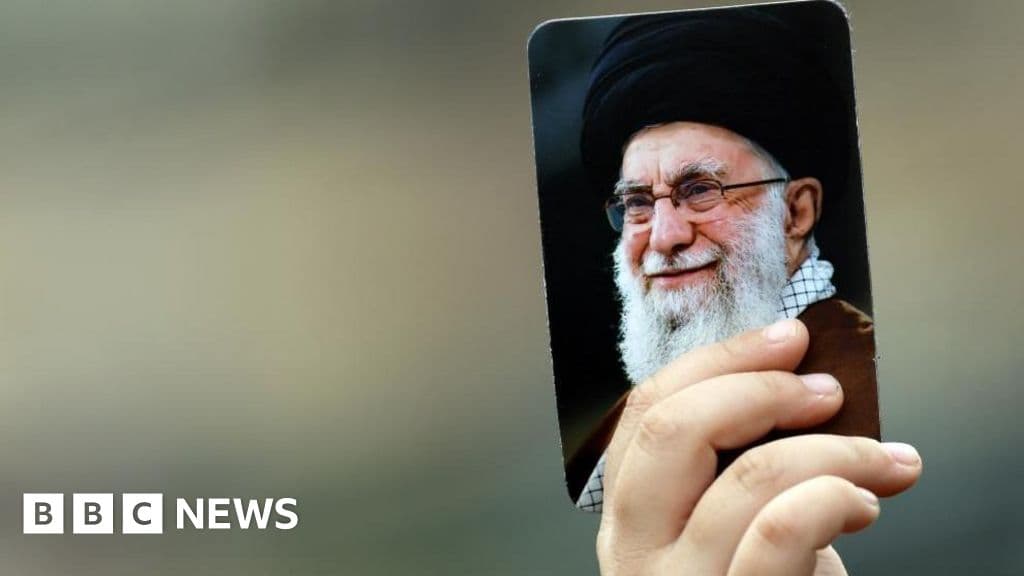
The sudden demise of Iran's Supreme Leader Ali Khamenei marks a profound rupture, propelling the Islamic Republic into its most uncertain phase since 1979. This intellectual analysis delves into the intricate geopolitical and institutional implications, exploring the architecture of power, succession, and the potential for regional escalation in a post-Khamenei era.
The sudden, decisive strike that led to the demise of Iran's Supreme Leader, Ali Khamenei, has irrevocably fractured the geopolitical landscape, propelling the Islamic Republic into its most precarious and uncertain phase since the 1979 revolution. This event, unfolding amidst a coordinated US-Israeli operation, targets not just individuals, but the very architectural integrity of Iran’s command and control, challenging its institutional resilience.
### A Rupture and its Reverberations
News of Khamenei's death, initially speculative, quickly solidified, igniting a spectrum of reactions both within Iran and among its global diaspora. Videos depicting pockets of jubilation across major Iranian cities and abroad underscored a profound hope for many – a historic rupture that years of civil resistance alone had struggled to achieve. For the architects of the strikes, President Donald Trump and Prime Minister Benjamin Netanyahu, the language was unambiguous: an urgent call for Iranians to seize an opportunity for profound governmental transformation.
The operation, dubbed 'Epic Fury' by the US, appeared surgically executed and largely controlled in its military phase. However, the subsequent political appeal to the Iranian populace remains an unpredictable variable, capable of igniting either systemic change or deepening regional instability. The immediate confirmation of Khamenei's death by Iranian state television, followed by the swift announcement of a temporary tripartite council, speaks to the regime's urgent need to project continuity and stability in the face of monumental loss.
### The Architecture of Succession: A Constitutional Labyrinth Tested
Underpinning Iran’s governance is a complex constitutional framework designed to ensure the perpetuation of the revolutionary system. The selection of a new Supreme Leader constitutionally falls to the Assembly of Experts, an 88-member clerical body. Yet, this process is far from a purely democratic exercise.
#### The Guardian Council's Gatekeeping Role
A critical limitation lies with the Guardian Council, a 12-member body intricately intertwined with the existing power structure. Six members are appointed directly by the Supreme Leader, while the other six are nominated by the judiciary chief (also appointed by the Supreme Leader) and approved by parliament. This mechanism effectively granted Khamenei significant, if not decisive, influence over the institution tasked with selecting his successor, shaping the field of potential candidates long before any formal vote.
#### Precedent and Internal Power Shifts
While public identification of potential successors is rare, a discreet committee within the Assembly of Experts is understood to vet candidates. Speculation had long circled Khamenei's eldest son, Mojtaba. However, the recent strikes reportedly claimed several of Khamenei's most trusted commanders within the Islamic Revolutionary Guard Corps (IRGC), potentially re-calibrating the internal balance of power and fracturing established alliances. The precedent set in 1989, when Khamenei himself rose to leadership despite not being a frontrunner, serves as a stark reminder that the outcome can profoundly defy expectations, challenging conventional analyses of power consolidation.
### Military Dimensions: A Decapitated Command Structure
Beyond the political machinations, the Islamic Republic has absorbed a severe military blow. Reports of multiple senior commanders killed in the initial strikes underscore a tangible sense of vulnerability. Command centers are compromised, leadership decapitated, and decision-making apparatuses compressed into crisis mode under ongoing aerial operations.
#### Operational Resilience Amidst Loss
Despite this strategic incapacitation, Iran has demonstrated a capacity for rapid retaliation. Within two days, Iranian forces launched strikes against US bases in allied Arab nations and targets within Israel. Notably, missiles struck non-military sites in Dubai and a civilian airport in Kuwait, dramatically widening the conflict's geographical footprint. This escalation signals that, even without its apex leader and key commanders, Iran retains significant operational capabilities and the will to project power.
#### Escalation and Regional Dynamics
The prospect of further regional escalation now looms large. From Tehran's perspective, a broadened conflict, incorporating its militant proxies across the Middle East, could serve as leverage to press for a ceasefire or avoid an unconditional surrender. Conversely, sustained military pressure, compounded by renewed large-scale domestic protests, poses an existential threat, potentially pushing the Islamic Republic towards systemic breakdown. The cohesion of the IRGC and other coercive apparatuses, in the absence of its long-serving leader, will be the ultimate test of state resilience.
### The Unfolding Scenarios: Resilience or Rupture?
As events unfold, all scenarios remain in play. The Islamic Republic, while weakened by the loss of its central authority figure and key commanders, still possesses institutional structures, formidable armed forces, and a demonstrated capacity for retaliation. This complex tapestry complicates any straightforward path to regime change. The coming days will be critical, revealing whether Tehran can maintain internal control amidst continued external pressure, if protests gain unstoppable momentum, and how far the regional conflict will spread. The direction of events will be shaped by the military limits and political resolve of all parties involved, charting a new, uncertain course for a pivotal nation.
"Architectural silence is often the most profound statement a structure can make. It creates space for the mind to breathe."— The EverGreen Compendium
Comments
No comments yet. Be the first.